JLS Vision AI — AI vision that turns chaotic product flow into order

Turning chaos into control.
From a random pile to the presentation the next machine needs.
JLS Vision AI is proprietary, AI-driven machine vision integrated with select JLS robotic systems. It identifies and classifies the product on top and pickable, tracks the pile as it shifts, and tells the robot how to pick, orient, and place each item into a controlled, organized flow — ready for the next operation. The result can be less manual sorting, less upstream separation equipment, and a smaller, more efficient line.
15 FPS
Designed so vision doesn't become the bottleneck
2D + 3D
Vision, with height measurement when needed
Chaotic Flow
Picks touching, overlapping & stacked product
In-Cabinet
AI-optimized edge hardware, no server room
Proprietary JLS TechnologyDeveloped for JLS robotic systems
In-House ProgrammingControls, Vision & Robotics Expertise
Factory-Tested ReliabilityBacked by JLS Service & Support
In-House Service & SupportDedicated Installation, Startup & Support
Delivery Confirmed at ProposalTimeline scoped to your project
JLS Vision AI logo — raptor head with camera-aperture eye

JLS Vision AI is a proprietary, AI-driven machine vision technology from JLS Automation that lets robotic systems pick food products directly from chaotic flow — where items are touching, overlapping, or stacked — without requiring upstream product separation. It identifies which products are accessible and pickable, classifies them, determines their orientation, and tracks them as the pile shifts — directing the JLS robotic system to pick, orient, and organize each item. It processes images at up to 15 frames per second. Developed specifically for JLS robotic systems and debuting at PACK EXPO International 2026.

Why it matters

The chaos won’t change. So the vision had to.

Traditional vision generally needs product separated, spaced, and presented in a clean layer before automation can work with it. Creating that presentation can require vibratory laners, spreader belts, chicaning systems — or two or three people manually sorting and orienting product.

JLS Vision AI changes that preparation step. It sees which product is on top and pickable, classifies its type and orientation, and tells a JLS robotic system how to handle it. The robot then turns the chaotic incoming product into an organized flow for the next machine — even as the pile shifts during picking.

Less manual sorting. Less equipment devoted to separation. A smaller, more efficient path from pile to production-ready flow.

On the actual demo cell

The same packets. Two very different presentations.
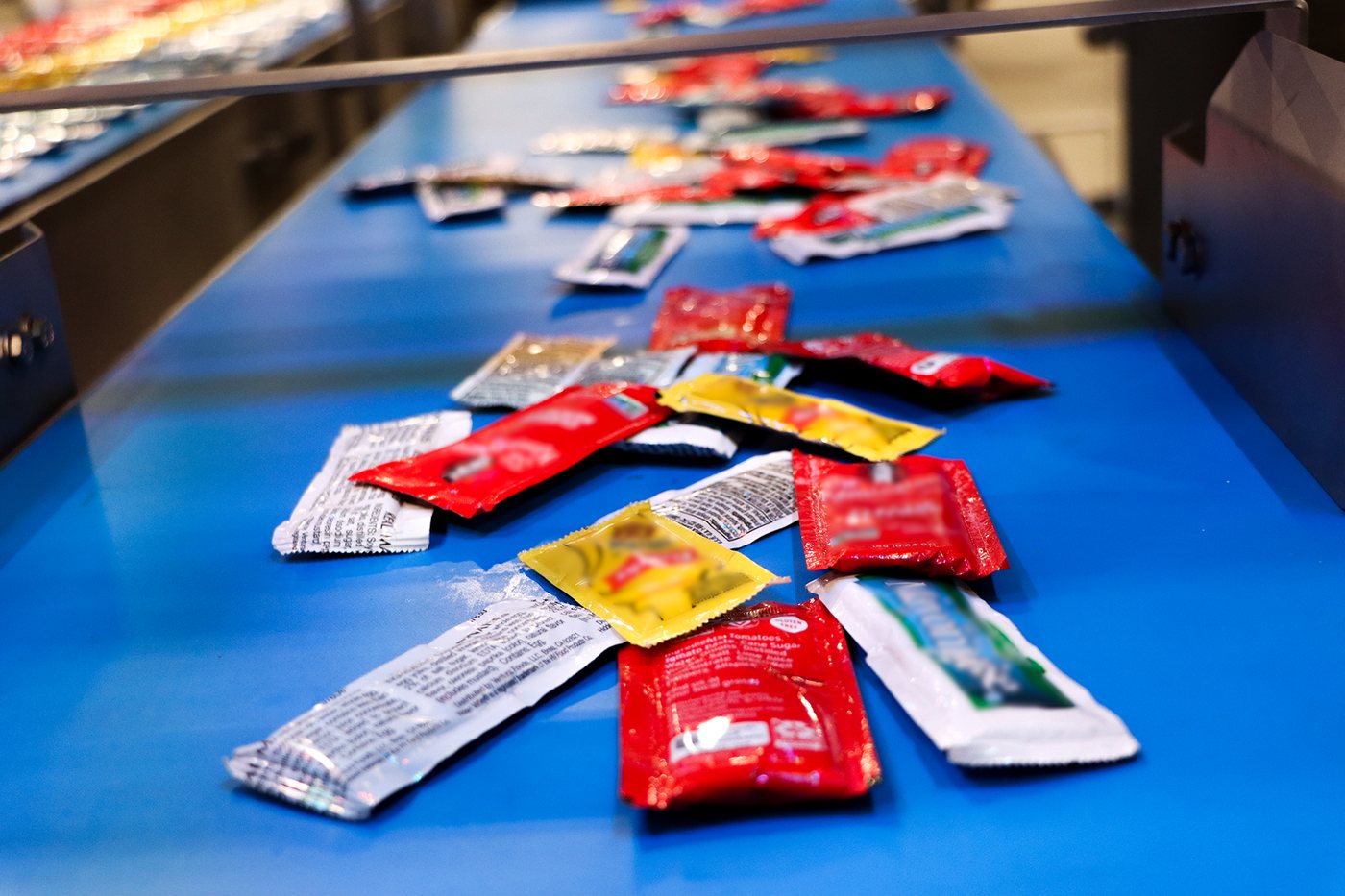
Before: condiment packets arriving in a chaotic, overlapping pile on the JLS Vision AI demo cell infeed
Before: packets arrive touching and overlapping — the presentation that stops traditional vision.
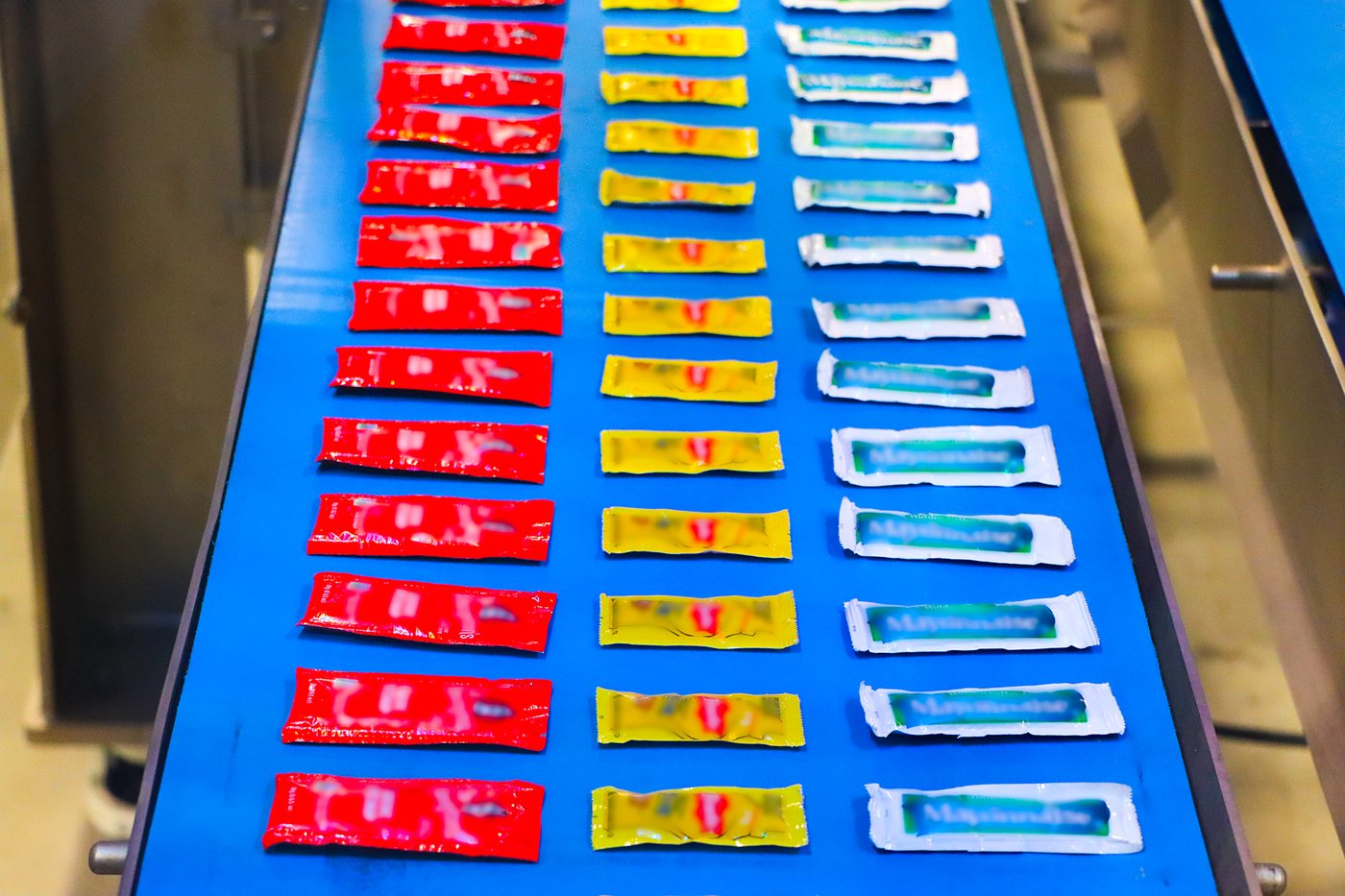
After: the same packets organized into rows by type and orientation by the JLS Vision AI-guided robot
After: classified by type, oriented by label, placed in rows — no upstream separation equipment.

Photos from the actual JLS Vision AI demonstration system — the same cell running at PACK EXPO Booth S-2776.

Capabilities

What the vision actually does

Organize for the next step
Turns chaotic input into controlled output

JLS Vision AI tells the JLS robotic system how to pick, orient, and place each product so the downstream machine receives it in the presentation it needs.

Chaotic-flow picking
Finds the pickable product in the pile

Detects products that are touching, overlapping, or stacked — and determines which one is on top and can actually be picked, so the robot works straight from bulk flow.

Classify & guide orientation
Understands what the product is and how it is positioned

Classifies products by type, determines their orientation, and identifies upside-down items — then tells the JLS robotic system how each item should be handled, placed, or flipped.

Track & reacquire
Keeps up when the pile moves

As picking disturbs the pile, the vision dynamically reacquires targets and updates the robot in near real time — no stopping to re-image a settled scene.

2D + 3D vision
Height measurement when it matters

Supports both 2D and 3D vision, adding height information when an application requires it — stacked product, variable thickness, depth-critical picks.

Real-world product
Built for variation, not lab samples

Excels with products that vary in shape, size, and presentation — tested on steaks, chicken breasts, frozen sausage patties, frozen omelets, cookies, condiment packets, flow-wrapped packages, brick packs, and transparent packaging.

Trainable inspection
Learns your product's quality features

Can be trained on application-specific characteristics — bones or fat content in proteins, surface defects like burn marks on baked goods, tears in packaging. (It complements, not replaces, contaminant-inspection systems like metal detection.)

15 frames per second
Image processing, on compact AI-optimized edge hardware

helping keep vision processing from becoming the system bottleneck The hardware lives inside the JLS control cabinet — low-power, industrial, no external processing rack.

See it live — PACK EXPO International 2026 · Booth S-2776

From a random pile to an organized flow, in front of you

This isn’t a concept or a prerecorded video. JLS Vision AI will be running live at Booth S-2776 — guiding JLS automation as it picks, organizes, and refeeds product in real time. Be among the first to see it in action.

The demonstration is built on a real customer challenge: thin condiment packets that arrive touching and overlapping — a product traditional vision could not reliably resolve. Watch JLS Vision AI direct a JLS robotic system as it:
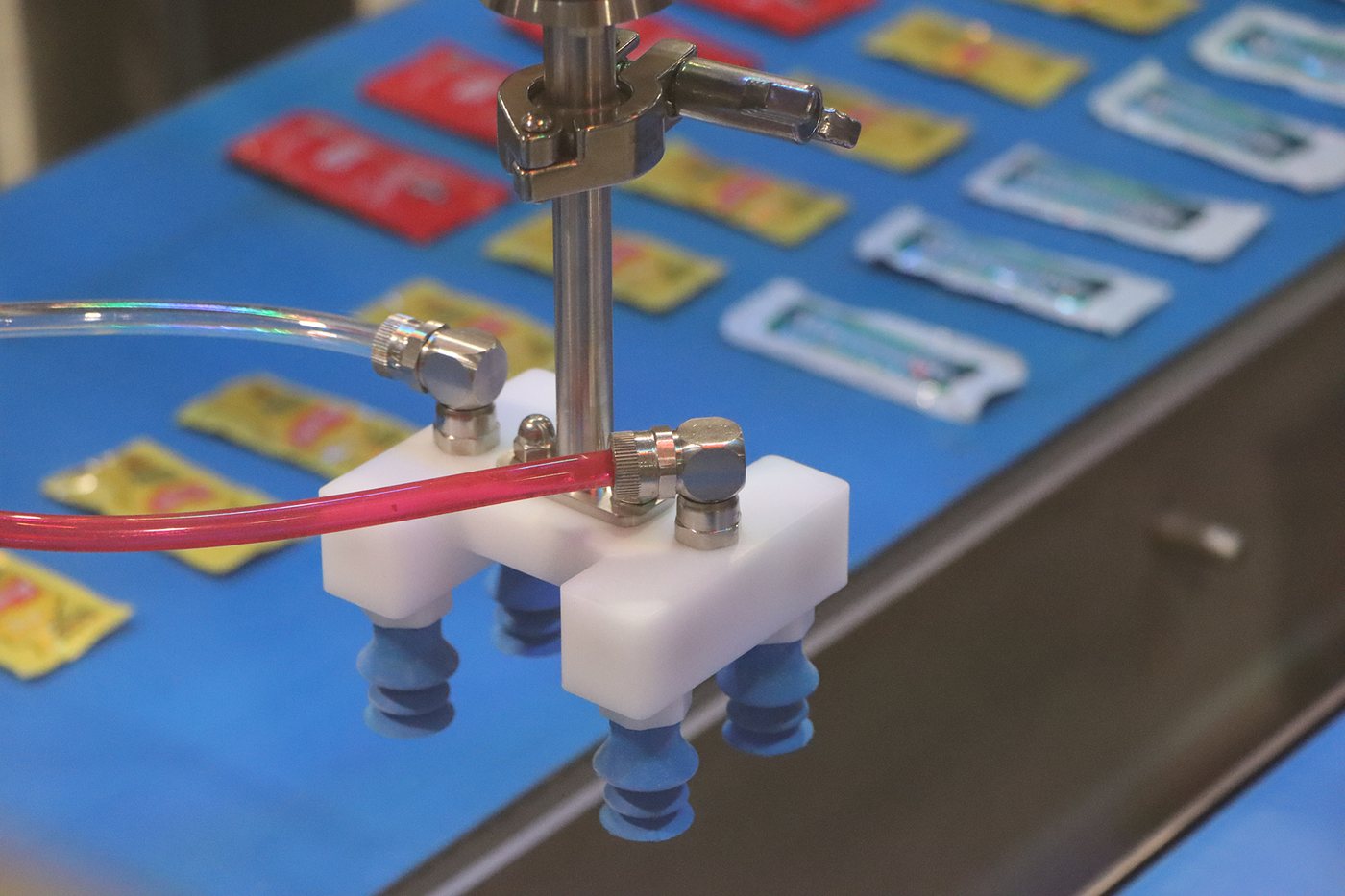
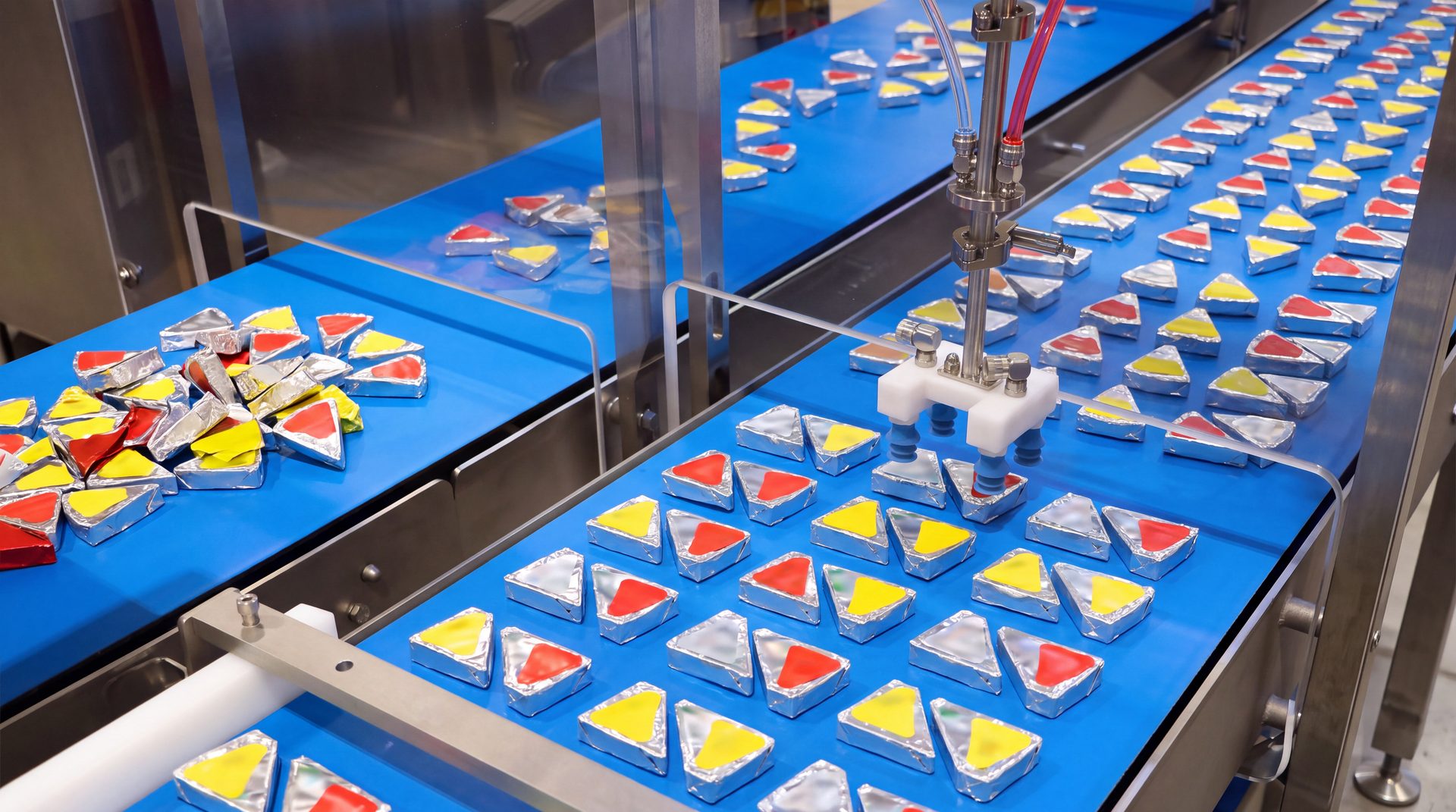
Vacuum end-of-arm tooling on the JLS Vision AI demo cell picking a condiment packet from the sorted flow

Identifies the top pickable packet within a random pile

Classifies packets by type and organizes them on the placement conveyor

Determines label orientation — and flips upside-down packets

Reacquires targets as product shifts — while the cell recirculates bypassed product for another pass

Narrated demo — Monday, Oct. 19
2:00 p.m. Central
Narrated demo — Tuesday, Oct. 20
2:00 p.m. Central
Running all show hours
Oct. 18–21 · McCormick Place, Chicago

The PACK EXPO demonstration cell features a JLS Level 4 washdown design with IP69K-rated components — the same hygienic standard our Level 4 production systems are built to.

The payoff

Simpler lines. Smaller footprints. Fewer bypassed products.

Turning a random pile into organized product flow can otherwise require multiple people, significant conveyor space, and specialized separation equipment. Integrated with a JLS robotic system, JLS Vision AI can perform that work quickly and consistently in a much smaller footprint — preparing product for the next operation without first forcing it into a perfectly separated presentation.

In one proposed customer-system comparison, eliminating upstream separation equipment reduced the estimated line footprint by 45% and projected capital requirements by approximately $1.5 million. Results vary by application.

Depending on the application, additional benefits can include greater throughput, higher robot utilization, fewer bypassed products, and reduced reliance on manual product handling.

Where it runs

Developed specifically for select JLS robotic systems

JLS Vision AI is an application-engineered technology available with select JLS robotic systems. The vision, robot, tooling, controls, product flow, and downstream requirements are engineered together for each application.

It is not sold as a standalone vision package for third-party robots. New-system and existing-system applicability is confirmed through an engineering review and product testing when required.

With this new vision technology, our robotic systems can effectively pick overlapping and touching products because the vision does more than locate an individual item — it determines which one is on top and can be picked.
Corey Wagner, Test Engineering Lab Manager Lead developer, JLS Vision AI

Prove it on your product

Send us your most chaotic product.
We'll show you what the vision sees.

Bring us the product that defeats conventional vision — overlapping, irregular, transparent, frozen. JLS validates the application on your actual product during the pre-sale process, and every production system is proven at Factory Acceptance Testing before it ships.

Real
Your product, not samples
U.S. Built
Developed in York, PA
No
Commitment required
Ask about testing your product

JLS Vision AI — what food manufacturers ask

Chaotic-flow picking, product separation, speed, inspection, and where it runs — answered plainly.

JLS Vision AI is a proprietary, AI-driven machine vision technology from JLS Automation that lets JLS robotic systems pick food products directly from chaotic flow — where items are touching, overlapping, or stacked. It identifies which products are accessible and pickable, classifies them, determines their orientation, and tracks them as the product pile shifts. It then directs the JLS robotic system to pick, orient, and organize the products into the presentation required by the next operation.

Traditional rules-based vision generally requires products to be separated into a clean, single layer before they can be reliably detected and picked. JLS Vision AI uses proprietary AI models and training techniques to work in chaotic flow — which can reduce or eliminate the product separation step and the equipment that performs it.

The equipment that exists to separate and organize product before robotic picking — vibratory laners, spreader belts, and chicaning systems. In one proposed customer-system comparison, eliminating upstream separation equipment reduced the estimated line footprint by 45% and projected capital requirements by approximately $1.5 million. Results vary by application.

JLS Vision AI processes images at up to 15 frames per second, helping ensure vision processing does not become the system bottleneck. It runs on compact, low-power, AI-optimized industrial edge hardware housed inside the JLS control cabinet.

Steaks, chicken breasts, frozen sausage patties, frozen omelets, cookies, condiment packets, flow-wrapped packages, brick packs, and transparent packaging. It is designed for products with significant variability in shape, size, and presentation — including irregular raw proteins.

When trained and validated for a specific application, JLS Vision AI can identify product-specific features such as bones or fat content in proteins, burn marks on baked goods, and tears in packages. These capabilities are application-dependent and do not replace contaminant-inspection systems such as metal detection.

Yes. JLS Vision AI supports both 2D and 3D vision, including height measurement when an application requires it — stacked product, variable thickness, or depth-critical picking.

It is an application-engineered technology available with select JLS robotic systems, with applicability confirmed during engineering review — the vision, robot, tooling, controls, and product flow are engineered together for each application. It is not sold as a standalone vision package for third-party robots. Applicability for a specific system is confirmed during engineering review.

Potential application to an installed JLS robotic system requires an engineering review. Compatibility depends on the system configuration, controls, vision hardware, product, and application. Availability is confirmed per application during that review. If you run JLS vision-guided equipment today, contact JLS and we'll evaluate your application.

No — JLS Vision AI is developed specifically for JLS robotic systems, where the vision, robot, tooling, and controls are engineered and programmed together in York, Pennsylvania.

Live at PACK EXPO International 2026, Oct. 18–21 at McCormick Place, Chicago — JLS Booth S-2776. Narrated demonstrations run Monday, Oct. 19 and Tuesday, Oct. 20 at 2:00 p.m. Central, and the system runs throughout show hours. Want to explore your own product? Talk to JLS — the right evaluation approach is confirmed during an application review.

Bring us the product your vision system can't handle.

If it's touching, overlapping, stacked, irregular, or transparent — that's exactly what JLS Vision AI was built for. See it live at PACK EXPO, or send us your product and see what the vision sees.

Over 1,000 installations. Predictable, fast performance. Premier, dedicated service.

  • Fast response times (remote + on-site)
  • Experienced JLS technicians
  • Spare parts & lifecycle support
  • Training that sticks with your operators
Already running a JLS line?
Connect with the service experts who keep your automation performing.
Spare parts, preventive maintenance, retooling, training, and on-site support — from JLS's in-house support team, backed by the engineers who built your machine.