/JLS%C2%AE_MasterLogo_Navy.png)
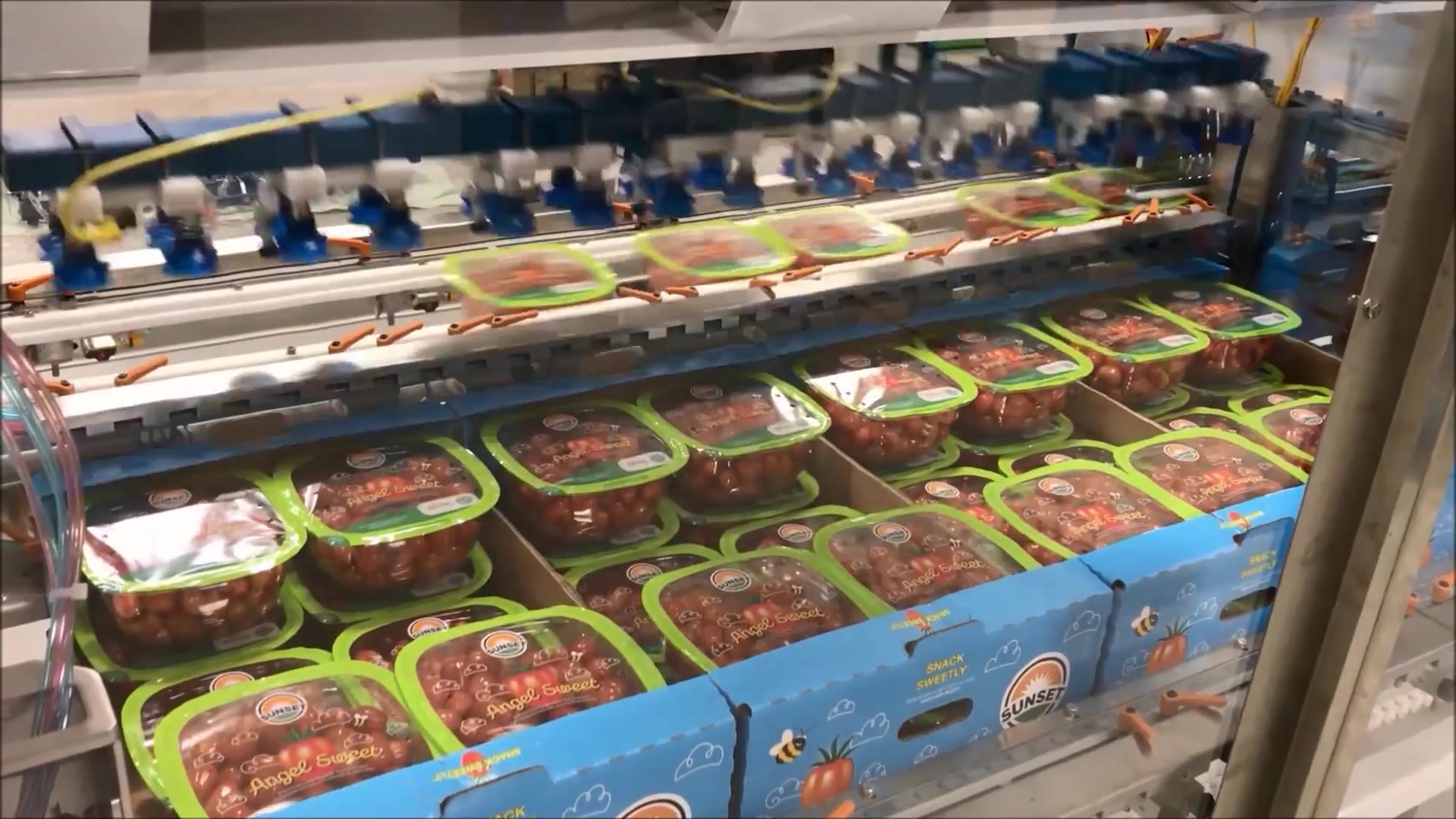
It is usually time when the pack-out station has become the thing limiting the line — not when the labor cost gets annoying. The clearest signal is a gap between what your upstream equipment is rated to produce and what actually leaves the end of the line. When that gap is real and persistent, and you cannot close it by staffing, automation stops being a cost question and becomes a capacity question.
Plenty of manual pack-out stations are running fine and should be left alone. The point of this piece is to help you tell the two situations apart before you spend capital.
Seven signals that the pack-out station has become the constraint
1. Your upstream equipment is faster than your output
Your thermoformer, tray sealer, stuffer or flow wrapper has a rated throughput. Compare it to what actually ships. If the upstream equipment is routinely throttled, idled or accumulating because pack-out cannot keep pace, you are already paying for capacity you cannot use.
2. Throughput sags across the shift
Measure the station in hour one and hour seven of the same shift. Manual rates degrade — that is human, not a criticism. If hour seven is materially slower than hour one, your effective daily capacity is well below the number anyone quotes in a meeting.
3. You cannot staff the station reliably
Persistent turnover at the pack-out station, frequent call-outs, or a standing reliance on temp labor all point the same direction. The cost is rarely just wages: it is the retraining, the supervision, and the days you run short-handed and lose output.
4. You are adding overtime or a shift to hit volume
If growth is being absorbed by hours rather than by capacity, that is a treadmill. Adding a shift to a constrained station multiplies the staffing problem rather than solving the throughput one.
5. Pack quality varies by crew and by hour
Inconsistent pack patterns, variable case presentation, product damage, or rework that depends on who is working. Retail customers notice pack presentation, and inconsistency is difficult to argue with when it shows up in a complaint.
6. The station carries real ergonomic exposure
Repetitive lifting, reaching and twisting at speed, sometimes in a cold or wet environment. Repetitive-motion injury exposure at pack-out is a genuine cost and a genuine risk, and it tends to be underweighted because it does not appear on a production report.
7. A new format or SKU is coming that manual cannot hold
New retail-ready formats, tighter pack patterns and new customer specifications often exceed what manual packing can reproduce consistently. If a format change is on the roadmap, that is frequently the moment automation earns its place.
When it is not time yet
An honest list matters more than a persuasive one. Automation is often the wrong answer when:
- Volume is low or intermittent. If the line runs a few hours a week, the payback usually will not be there.
- The product mix changes constantly and unpredictably. Automation handles variety well when the variety is known and tooled for. Genuinely unpredictable mix is harder.
- The station is already efficient with stable staff. If you are meeting rate, quality is consistent and the crew stays, there may be no problem to solve.
- The real constraint is somewhere else. Automating pack-out when the actual bottleneck is upstream just moves the queue.
- The product or format is not suited to robotic handling. Some are not. That is worth establishing early through application testing rather than late through disappointment.
What to measure before you decide
Four numbers make the conversation concrete, and you can gather all of them in a week:
- Rated upstream throughput versus actual shipped output, averaged across a full shift rather than measured at the best hour.
- Headcount at the station across all shifts, with the fully loaded labor rate rather than the base wage.
- Turnover and absenteeism at that specific station, not the plant average.
- Time lost to changeover and sanitation at pack-out, since automation changes both — sometimes for the better, sometimes not, depending on the design.
With those in hand you can run a defensible payback rather than a hopeful one. We set out a full framework in how to calculate ROI on robotic packaging automation, and what to press suppliers on in how to evaluate packaging automation vendors on ROI and uptime. Most JLS projects are evaluated against a payback in the 24 to 36 month range, though the result depends entirely on the application.
Start smaller than you think
Upgrading to pack-out automation does not have to mean automating the whole line at once. A single robotic cell at the constraint frequently unlocks the upstream capacity that was already paid for, and it establishes whether the product runs well before a larger commitment. If a full line is the eventual goal, it is usually better reached in stages that each stand on their own.
Frequently asked questions
When is it time to upgrade to pack-out automation?
When the pack-out station has become the constraint on the line — typically shown by upstream equipment running faster than actual output, throughput that sags across the shift, persistent staffing difficulty at the station, or a new format that manual packing cannot hold consistently.
How do I know if pack-out is really my bottleneck?
Compare your upstream equipment's rated throughput with what actually ships, averaged across a full shift. If upstream equipment is routinely throttled or accumulating because pack-out cannot keep pace, the constraint is at pack-out.
When is packaging automation not the right choice?
When volumes are low or intermittent, the product mix changes unpredictably, the manual station is already meeting rate with stable staff, the true bottleneck is elsewhere on the line, or the product format is not suited to robotic handling.
Do I have to automate the whole line at once?
No. A single robotic cell placed at the constraint often unlocks upstream capacity that is already paid for, and it proves the application before a larger investment. Staged automation is common.
Talk to an application engineer
Related reading: 3 signs your tray sealing line has outgrown manual case packing. Explore robotic case packing and primary product handling from JLS Automation, York, Pennsylvania.
What do you want to know?
By submitting, you agree that JLS Automation and Robert Reiser & Co. may contact you about your inquiry.
Reviewed by
JLS Automation Engineering — York, PA
See it run on your product.
Bring us your product. We'll test it in our York, PA lab and prove the automation before you commit.
Schedule a facility tour