Delicate fillets. Punishing washdowns.
Both handled.
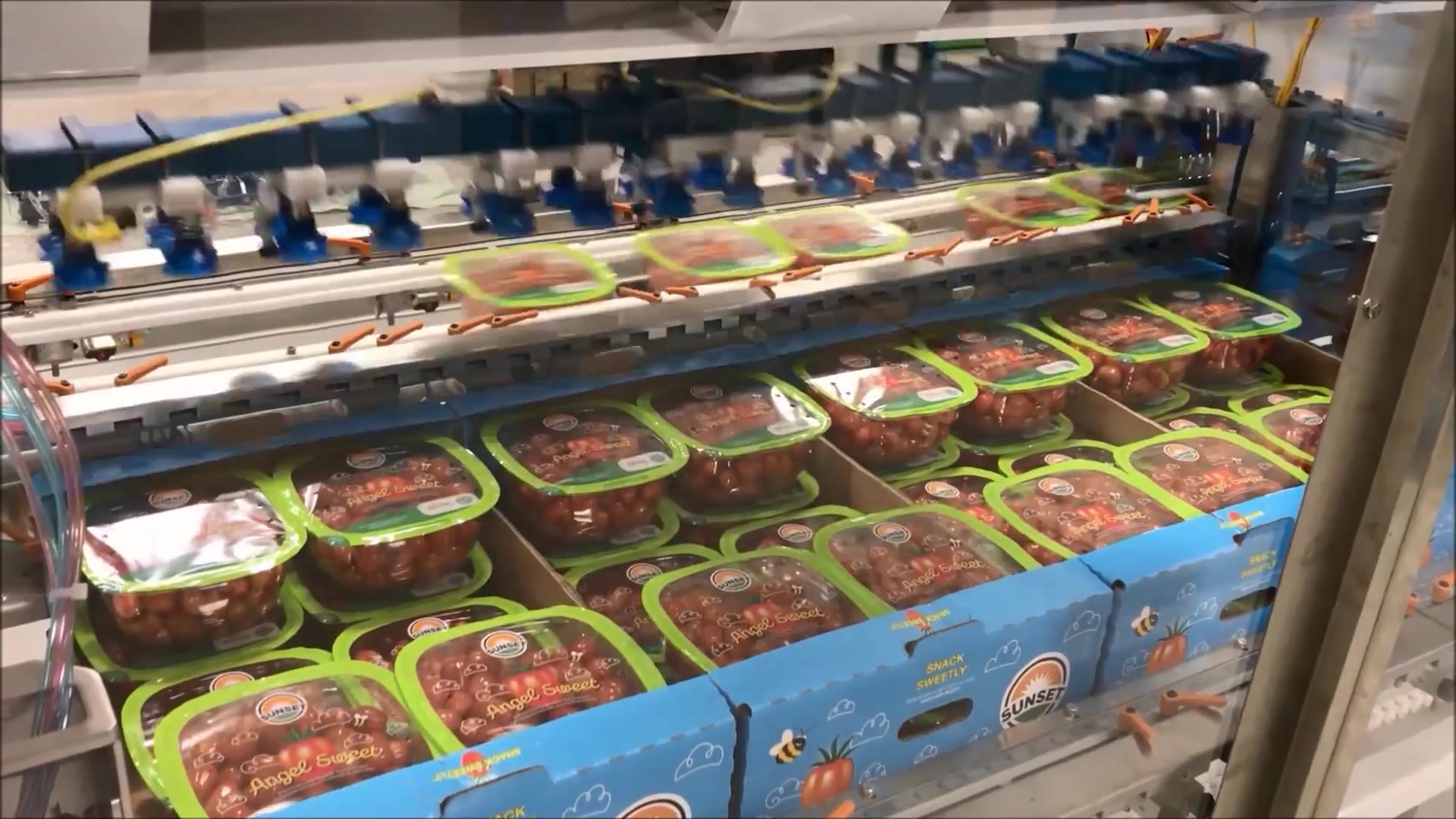
JLS builds robotic packaging automation purpose-built for seafood — vision-guided systems that load fish fillets, salmon portions, shrimp, surimi, and breaded seafood into thermoformer pockets, vacuum-skin packs, foam and MAP trays, pouches, and cases. JLS-engineered VOB 2.0 tooling handles the delicate, slippery product that demands specialized tooling, and IP69K-rated components can be specified for daily washdown in FDA-regulated seafood facilities. Every line is engineered, programmed, and supported entirely in-house by JLS.
In action
Watch JLS robotics handle seafood — at full production speed.
Thermoformer loading
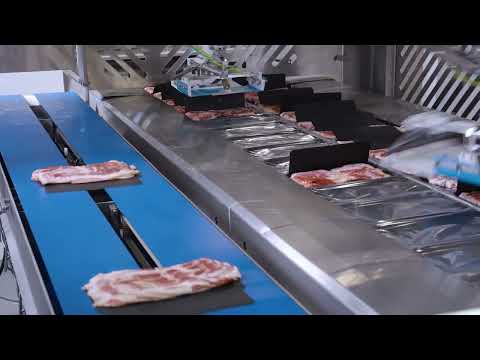
Sanitary robotic thermoformer loading
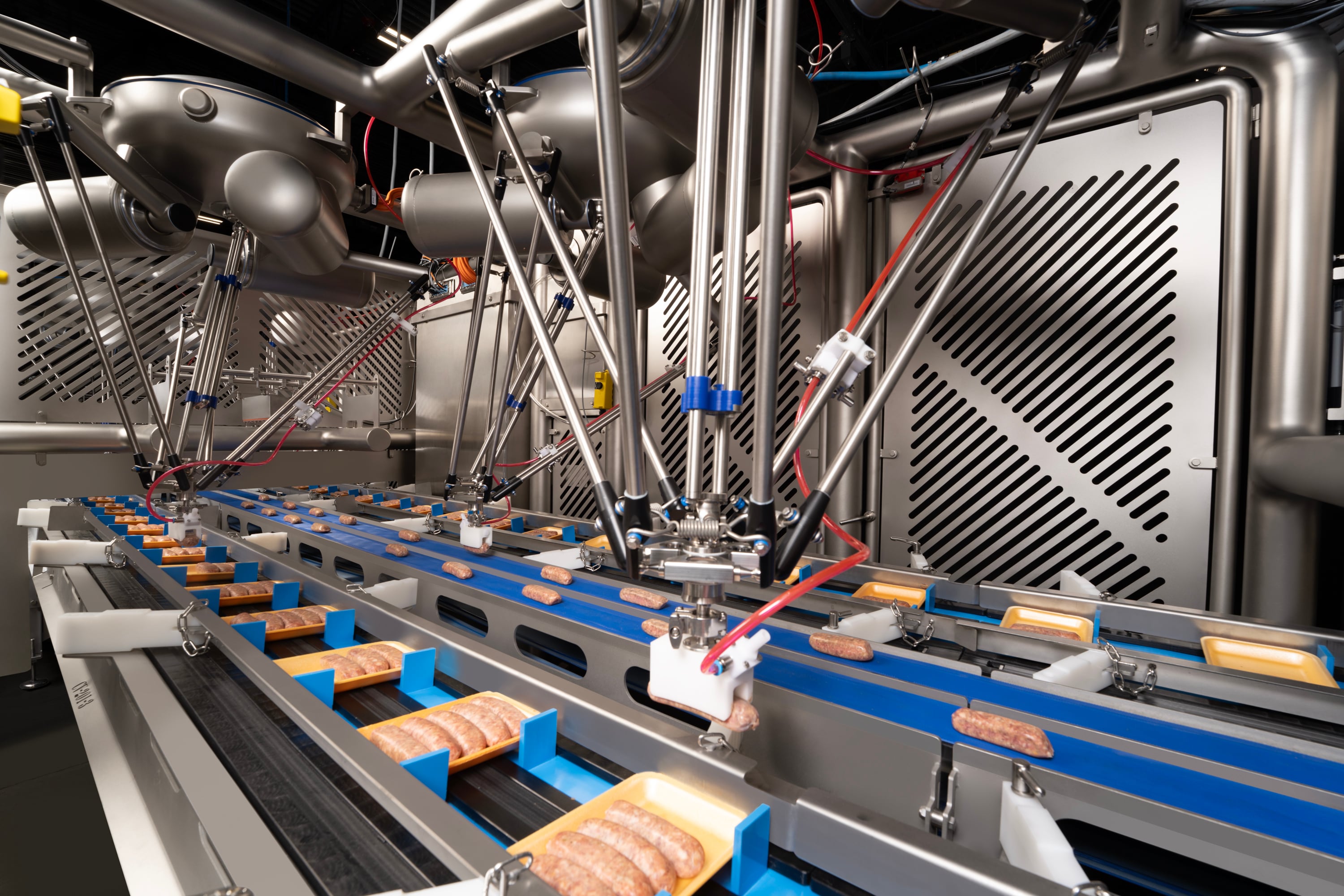
Primary handling — vision-guided Talon robots pick product off the belt and place it into thermoformer pockets.
Seafood's toughest
packaging headaches. Solved.
We've spent decades on wet, cold protein lines. These are the problems seafood processors bring us most — and how JLS robotics solve them.

Sanitation & food safety under constant washdown
Delicate, slippery seafood that's hard to grip and easy to bruise

Labor that's hard to staff in cold, wet processing rooms
Throughput & consistency capped by hand-packing
Seafood packaging automation,
loading to case packing.
From primary loading through case packing — Talon loads your packages, Osprey and Hawk case-pack them, with construction matched to the sanitation program of FDA-regulated seafood facilities.
Thermoformer & vacuum-skin packs
Foam, MAP & paperboard trays
Bags, pouches & breaded seafood
Retail-ready cases & cartons
Have a custom seafood product?
If it can be filleted, portioned, breaded, or IQF-frozen, our engineers have probably packed it — and if not, we'll figure it out.
Test before you commit
Send us your seafood products.
We'll put them to the test.
Before the design is finalized, send product samples — fillets, portions, IQF shrimp, or breaded seafood — or a close proxy, subject to project scope and availability. JLS application engineers test tooling, pick method, and pack pattern to establish feasibility; rate is validated during FAT before shipment, with final commissioning completed at your facility.
Designed to get wet. Built to be cleaned.
In an FDA-regulated seafood facility, sanitation isn't a feature — it's the whole game. Every JLS seafood system is engineered for your plant's sanitation program — with hygienic washdown construction where exposed product requires it and cleanable construction in packaging areas, with IP69K-rated components where the application calls for it — so your line stays compliant and your downtime stays low.
* IP69K refers to the ingress-protection rating of selected components (robots, motors, enclosures) specified for an application — not a rating of the complete machine. Contact JLS for your application.
More automation insights.
Engineering guides, application deep-dives, and ROI analysis for food manufacturers evaluating food packaging automation.
When Is It Time to Upgrade to Pack-Out Automation?
It is usually time when the pack-out station has become the thing limiting the line — not when the labor cost gets annoying. The c…
How to Evaluate Packaging Automation Vendors on ROI and Uptime
Evaluate vendors on their assumptions, not their numbers. Any supplier can produce a favorable payback figure by choosing a genero…
What Hygiene Design Features Matter for Fresh Meat Packaging Machines?
For fresh meat, the hygiene features that matter most are the ones that decide whether a machine can be cleaned quickly and comple…
Seafood packaging automation FAQs.
Pricing is confirmed in the proposal and depends on the product — filets, portions, shrimp, breaded items — the package format and the rate. Seafood projects are commonly evaluated on a 24–36 month payback range, depending on the line. The case is usually built on labor at thermoformer or tray infeeds across shifts, on reduced handling of high-value product, and on presentation — filets placed consistently in the pocket. JLS reviews product mix, formats, rate, staffing and the sanitation window to show where the return is strongest.
Fish fillets and portions (salmon, whitefish, tilapia), shrimp, scallops, surimi, and breaded or coated seafood — loaded into thermoformer pockets, foam, MAP and VSP trays, pouches, bags, cartons, and cases.
With tooling built for delicate, slippery product. JLS VOB 2.0 Vacuum on Board tooling picks filets, portions and breaded seafood directly off the line and places them into thermoformer pockets or trays without marking the flesh or disturbing coating. The vacuum is generated in the tool itself, which simplifies plumbing, and its airflow is optimized using computational fluid dynamics (CFD). Tooling is engineered and lab-tested per product.
Yes, with construction matched to each station. Talon primary handling can be specified with IP69K-rated robots and components for daily high-pressure, high-temperature washdown; Osprey case packing uses cleanable construction, with higher-sanitation options matched to the application. Open-frame, sloped stainless steel construction is designed to fit FDA-regulated seafood plants.
Yes. JLS integrates with your portioner, breading line, spiral freezer, tray sealers and thermoformers, and your existing upstream and downstream equipment into one coordinated seafood line.
Yes. Talon picks IQF fillets, shrimp, and breaded seafood into thermoformer pockets or MAP trays with vision handling random orientation, and custom EOAT protects delicate flesh and coating through the pick-and-place sequence.
Throughput depends on product and format. Osprey tray and case packers run at line speed in single- and multi-head configurations, and tray and case rates are sized to your line and SKU mix.
Changeover between seafood SKUs — filet sizes, portion counts, tray or thermoformer formats — is recipe-driven through the HMI, with end-of-arm tooling designed to swap by hand where the format changes. The SKUs in the project scope are set up and verified at commissioning, and new formats can be added later as recipes or tooling.
Yes. Product testing is often an important part of seafood automation projects. Seafood behavior can vary by species, temperature, moisture, fat content, fillet size, coating, surface condition, and how the product arrives at the automation. JLS Flight Lab can test product samples, or a close proxy, subject to project scope and availability, to establish the right tooling, pick method, conveyor control, and placement approach before final design — reducing project risk. Rate and performance are validated during FAT before shipment, with final commissioning completed at your facility.
Yes. JLS seafood automation can often be integrated into existing production and packaging lines. The final design depends on available floor space, product presentation, line speed, controls, sanitation access, upstream equipment, and downstream packaging equipment. JLS reviews the full line so the automation fits the way the plant actually runs, instead of forcing the plant to work around a standard machine.
To evaluate a seafood automation project, JLS typically reviews the product type, species, portion or fillet dimensions, product weight, photos or videos of the current line, package format, target speeds, current labor model, sanitation requirements, available floor space, upstream equipment, downstream equipment, SKU mix, and the main production problem the system needs to solve. For seafood, product behavior matters — moisture, fragility, coating, orientation, and IQF condition may require testing to validate the right handling method, tooling, conveyor control, and robot configuration.
Seafood systems are designed, built and programmed at JLS in York, Pennsylvania, and supported by an in-house team backed by direct access to JLS engineering and controls expertise — remote diagnostics, on-site service, training and parts. Seafood tooling is product-specific — a gripper for a salmon portion is not a gripper for breaded shrimp — and it is designed by JLS engineers and stocked and supported by JLS’s in-house team working directly with them.
Yes. Seafood plants run wet and cold, and the systems are built for it — open-frame sloped stainless construction, NEMA 4X-rated control enclosures and IP69K-rated robots and components where the application calls for daily high-pressure, high-temperature washdown. Salt and brine exposure is considered in material selection. Systems are designed to fit FDA-regulated seafood facilities.
JLS thermoformer-loading, tray-loading, and case-packing platforms are proven across fresh and frozen protein lines, and seafood applications are evaluated one at a time — usually starting with product testing in the JLS Flight Lab to confirm the pick method and handling for your species, portion, and package.
Still have a question that isn’t answered here?
What do you want to know?
Ask us anything — an automation expert will follow up.
Talk to an automation expert
Have a seafood product or package you need automated?
Tell us what you’re packaging and what you’re trying to solve. A few sentences is enough.
Prefer to talk? Call (717) 505-3800.
Ready for the realities of your seafood line?
From fillets and portions to shellfish and breaded seafood — bring us your product. We'll test it in our York, PA lab, engineer the automation, and prove the application — before we say yes.
Planning a complete seafood line?
JLS builds complete seafood lines — from primary loading through tray loading, case packing, and cartoning — integrated as a single solution from one team in York, PA.
Together, JLS and Reiser help food manufacturers develop coordinated processing and packaging lines—from product preparation and primary package loading and sealing through cartoning and case packing, with third-party collation, palletizing, and load securement coordinated into the plan.
Illustrative line architecture. Stages, equipment suppliers and sequence vary by product and project scope. Not every food line uses every stage, and slicing, cooking, freezing, inspection and other processes may occur in different positions.
Scroll left and right to scan the full line. Open the printable line map →
Reiser role across the line
Food-processing expertise, application development, equipment selection, product testing, and sales & lifecycle support.
JLS role at robotic packaging stages
Robotic engineering, product & package handling, controls interfaces, and integration & FAT when included in project scope.
Let’s talk more about planning your full line.
Tell us who you are and a bit about your line. An automation expert will reach out — and we’ll bring the right people from JLS and Reiser to the conversation.
Over 1,000 custom installs. Predictable performance. Premier, dedicated service.
- Factory-tested reliability
- In-house programming — York, PA
- In-house support team, backed by direct access to JLS engineering and controls expertise
- Fast dispatch from York, PA — within a day's drive of most East Coast and Midwest plants
- Remote diagnostics + on-site support
/JLS%C2%AE_MasterLogo_Navy.png)