Start with what you make.
Our robots know how to handle it.
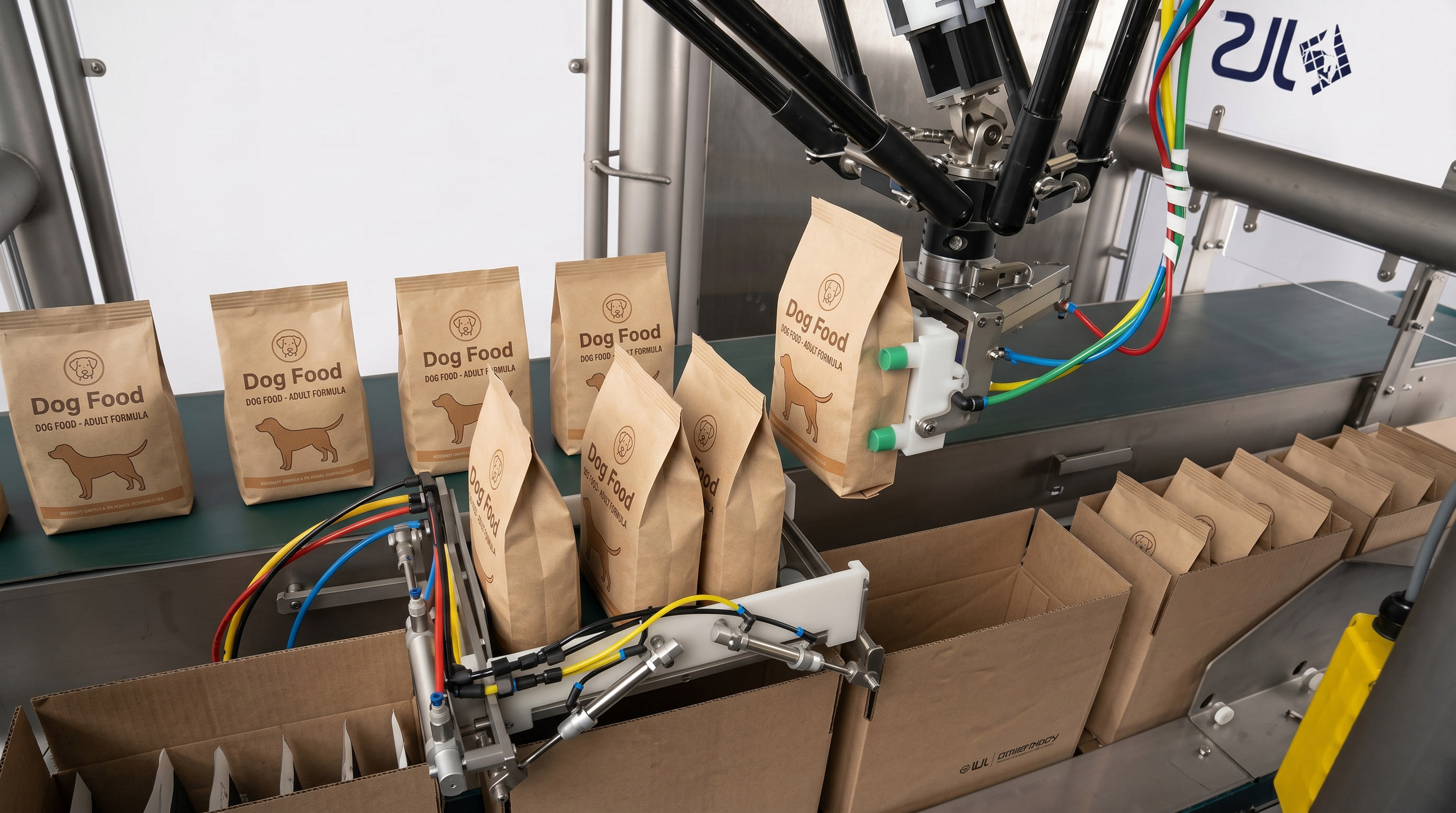
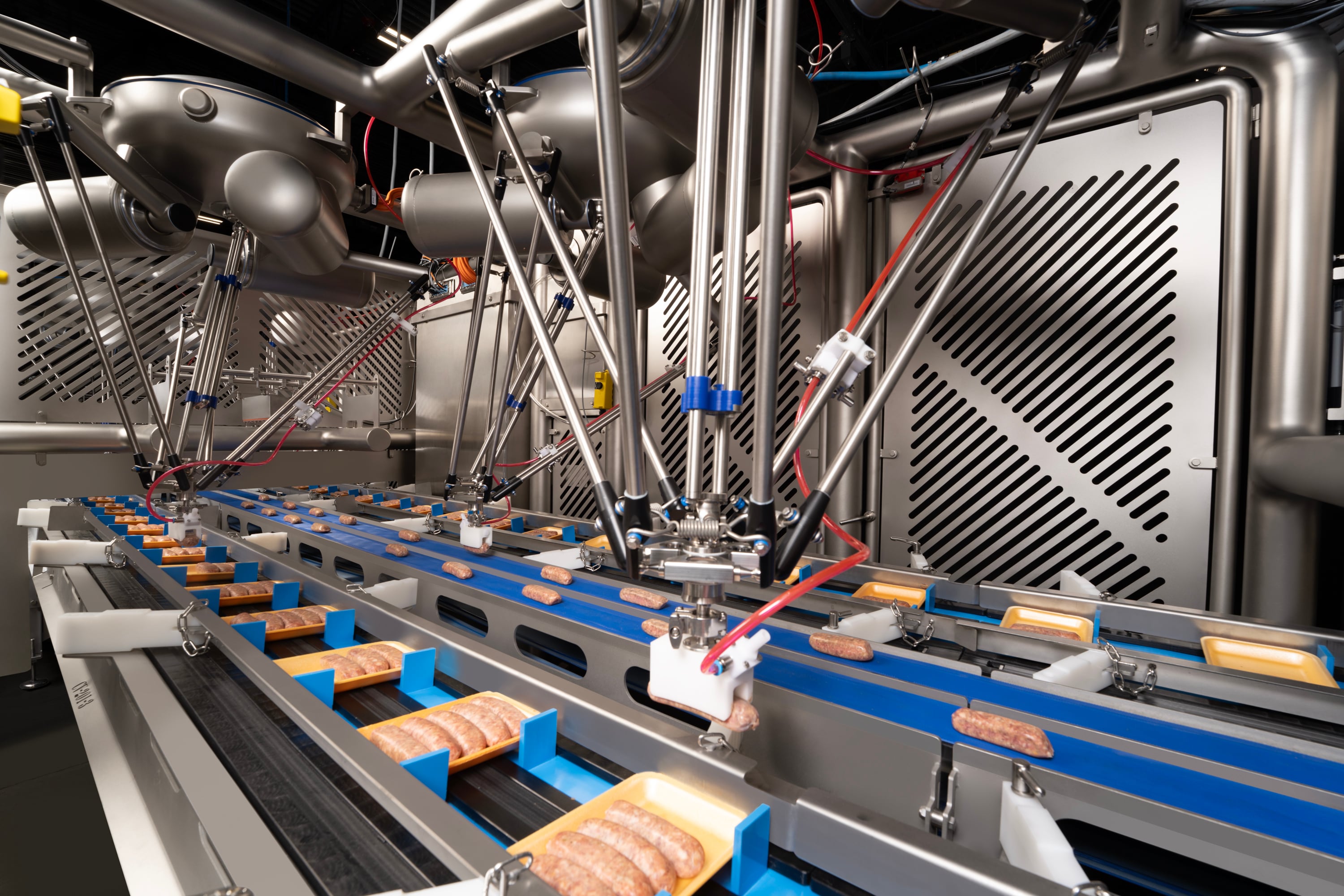
JLS builds robotic end-of-line packaging systems engineered around your specific food product — fresh meat, poultry, seafood, cheese, bakery, frozen, snacks, ready meals, and pet food. Backed by more than 70 years of experience and multiple U.S. patents in food packaging automation, JLS matches construction to each plant's sanitation program — including hygienic design with IP69K-rated components for primary product handling — and configures each system with product-specific tooling. Systems are engineered and programmed in-house, and JLS’s in-house support team has direct access to JLS engineering and programming expertise.
16 food markets. One company.
Each industry has its own combination of hygiene rules, throughput targets, packaging formats, and product handling challenges. Pick yours.
Proteins
Whole-muscle & ground — steaks, chops, ground beef, sliced deli.
Explore fresh meat →
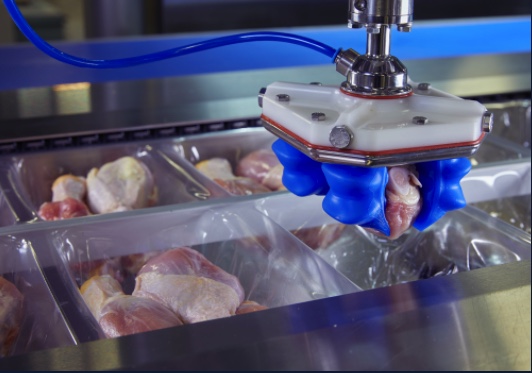
Raw chicken, sausages, patties & ground poultry.
Explore poultry →
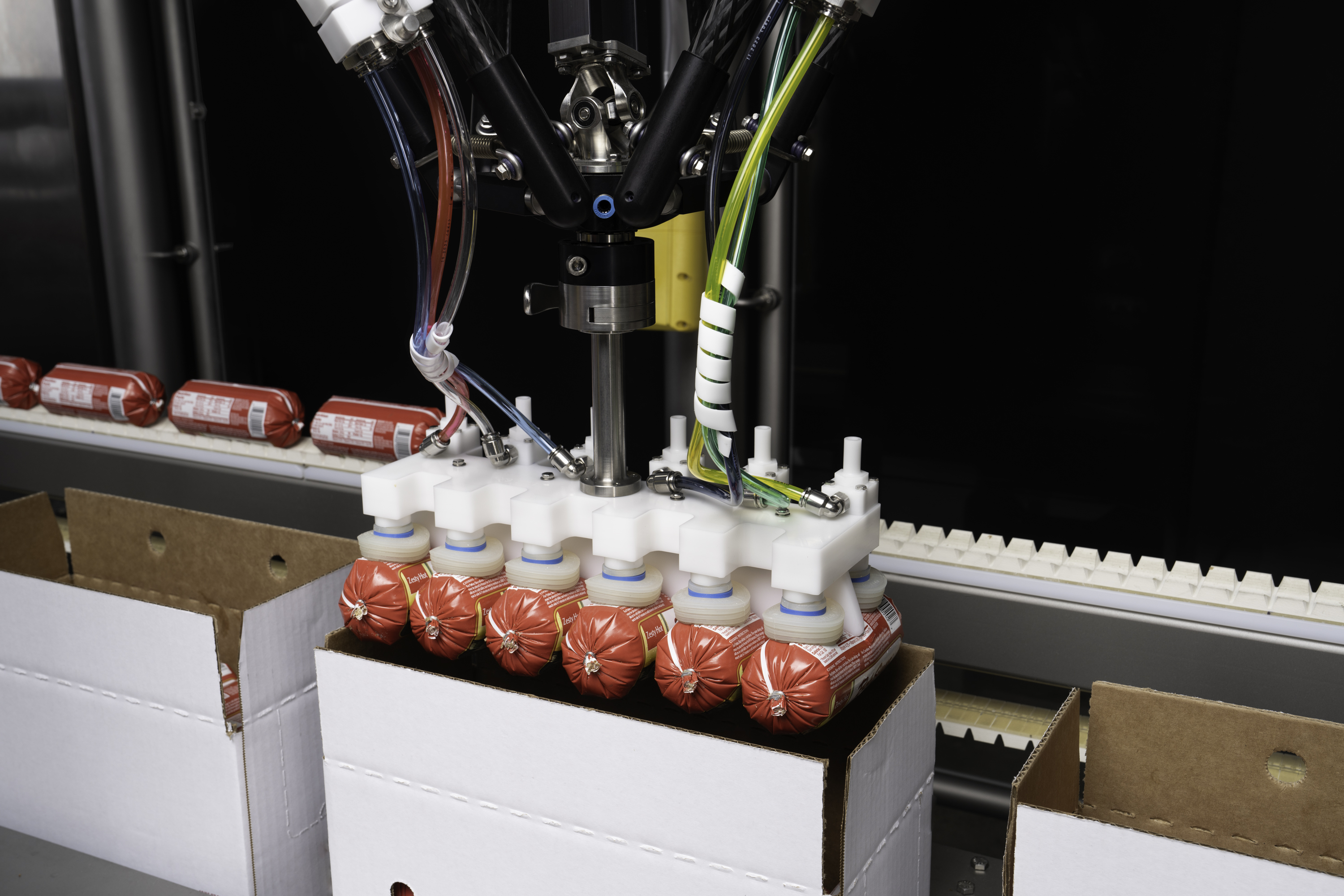
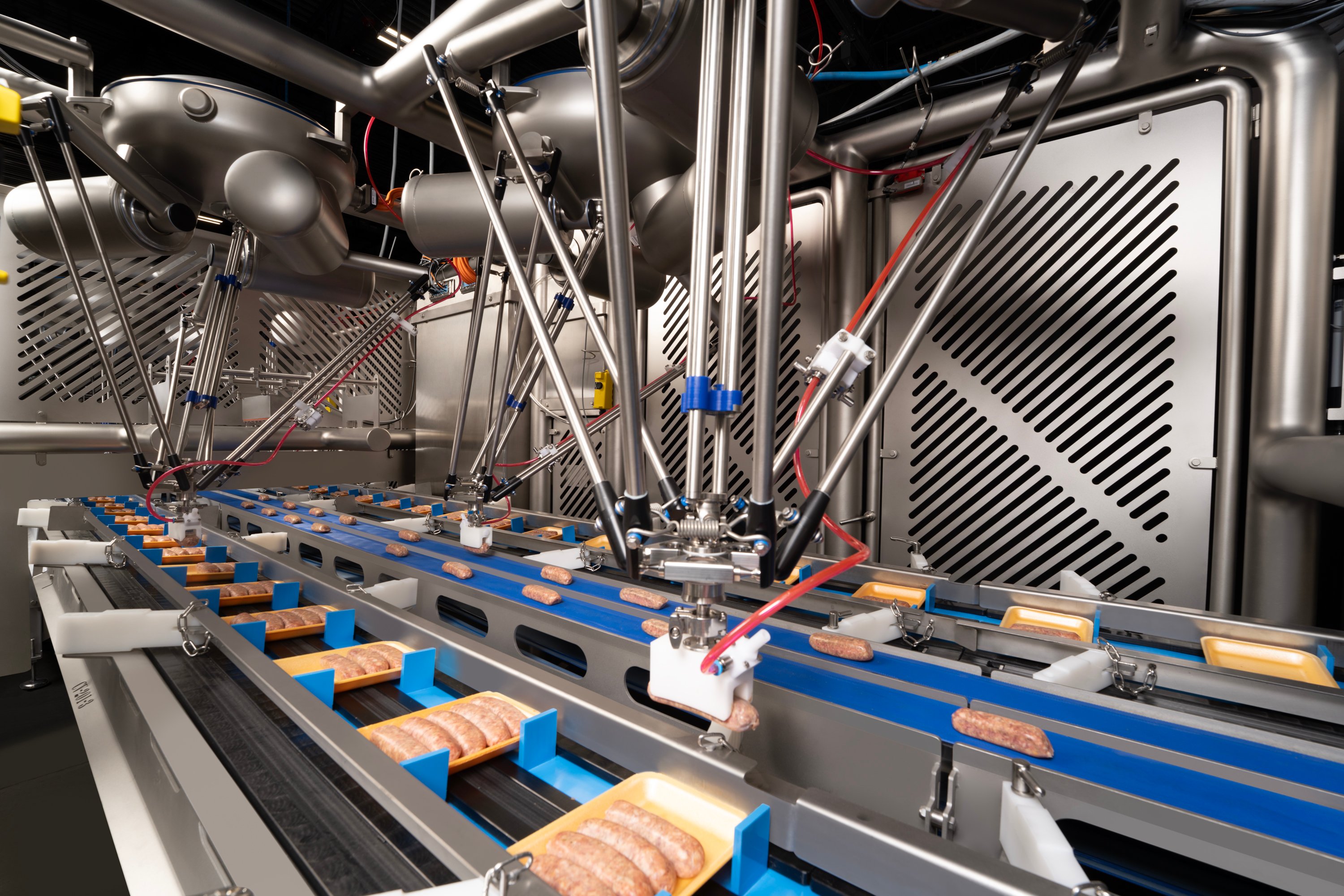
Links, hot dogs & ground-meat chubs.
Explore sausage & chubs →
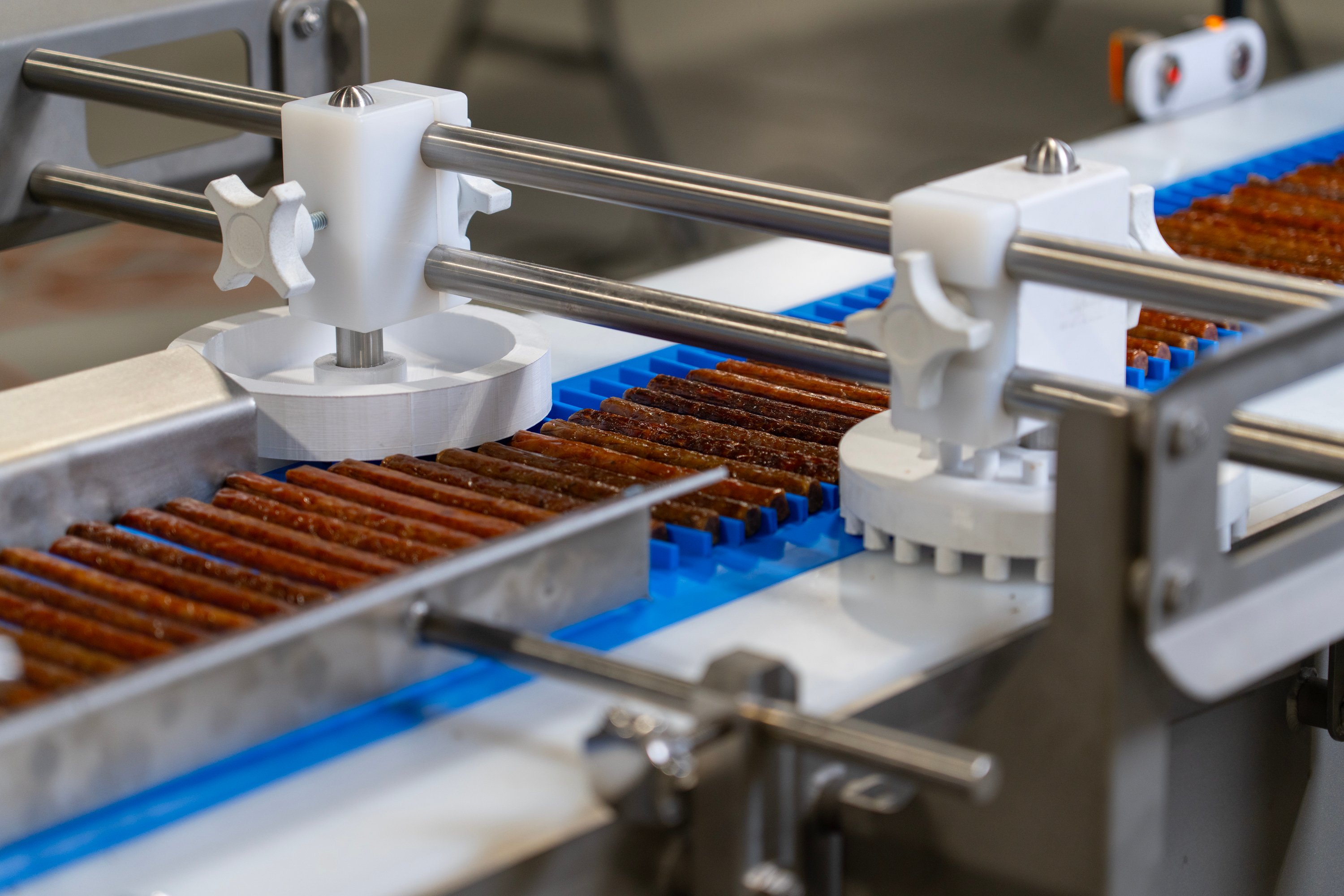
Beef sticks & other meat snack sticks, collated and cased.
Explore meat & snack sticks →
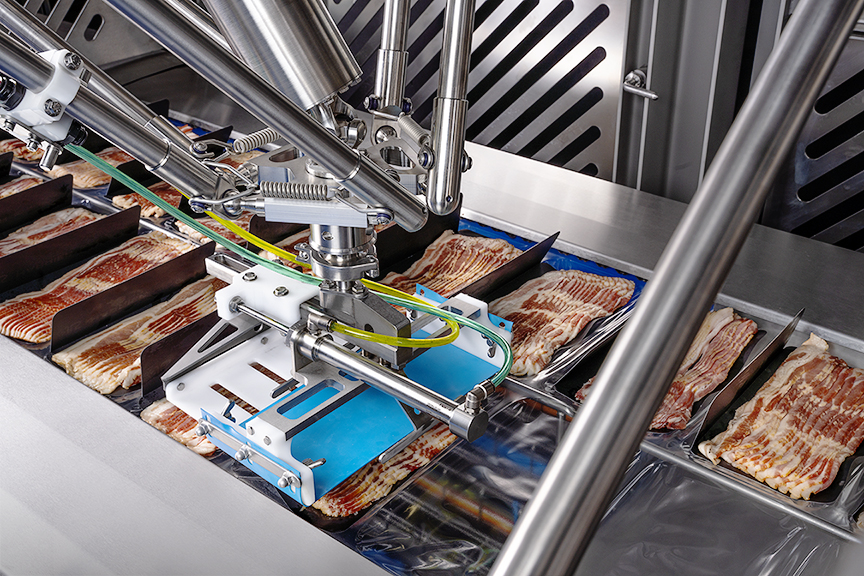
Shingled bacon drafts, gently handled.
Explore bacon draft →
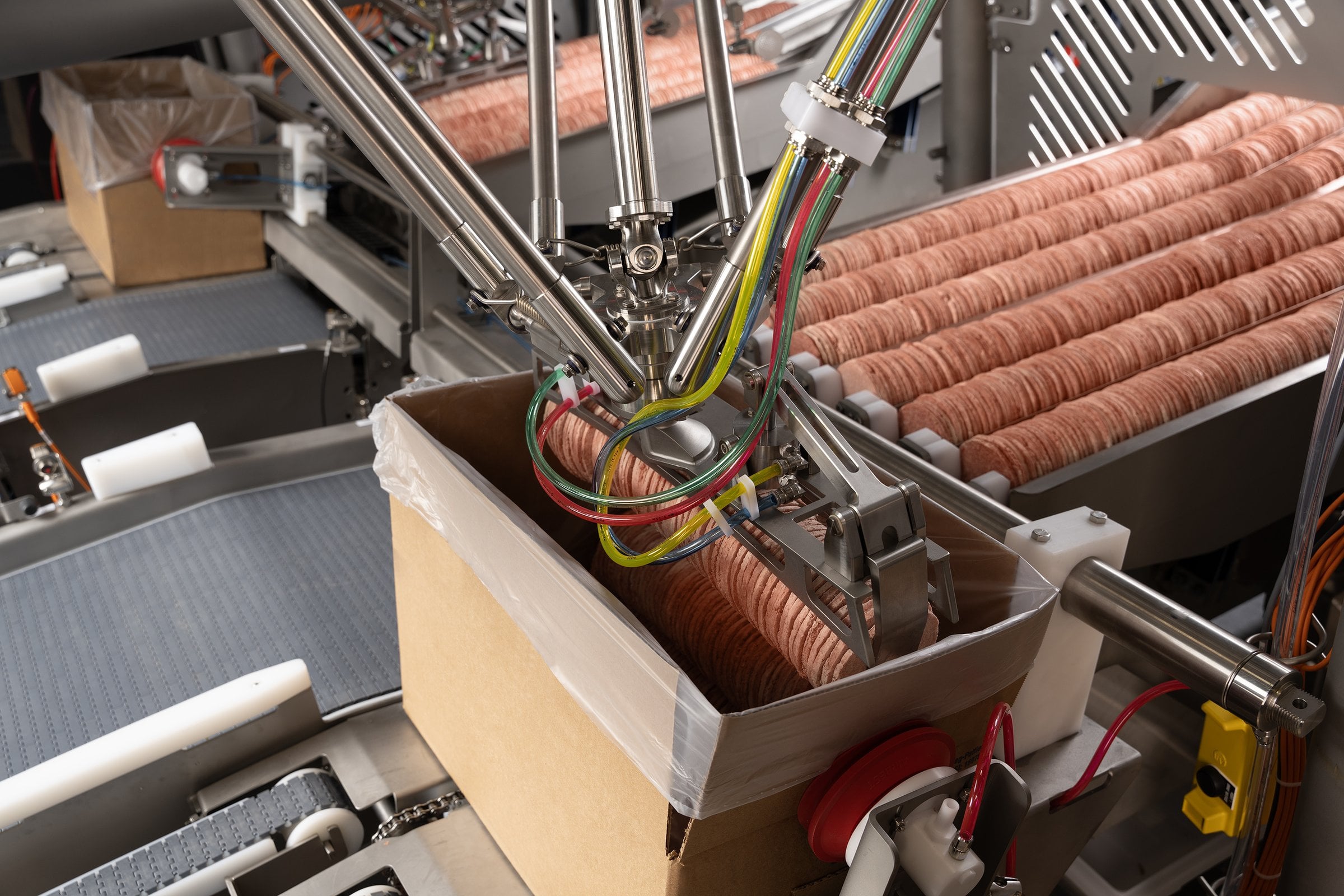
Patties, nuggets & formed proteins.
Explore formed & portion-controlled →
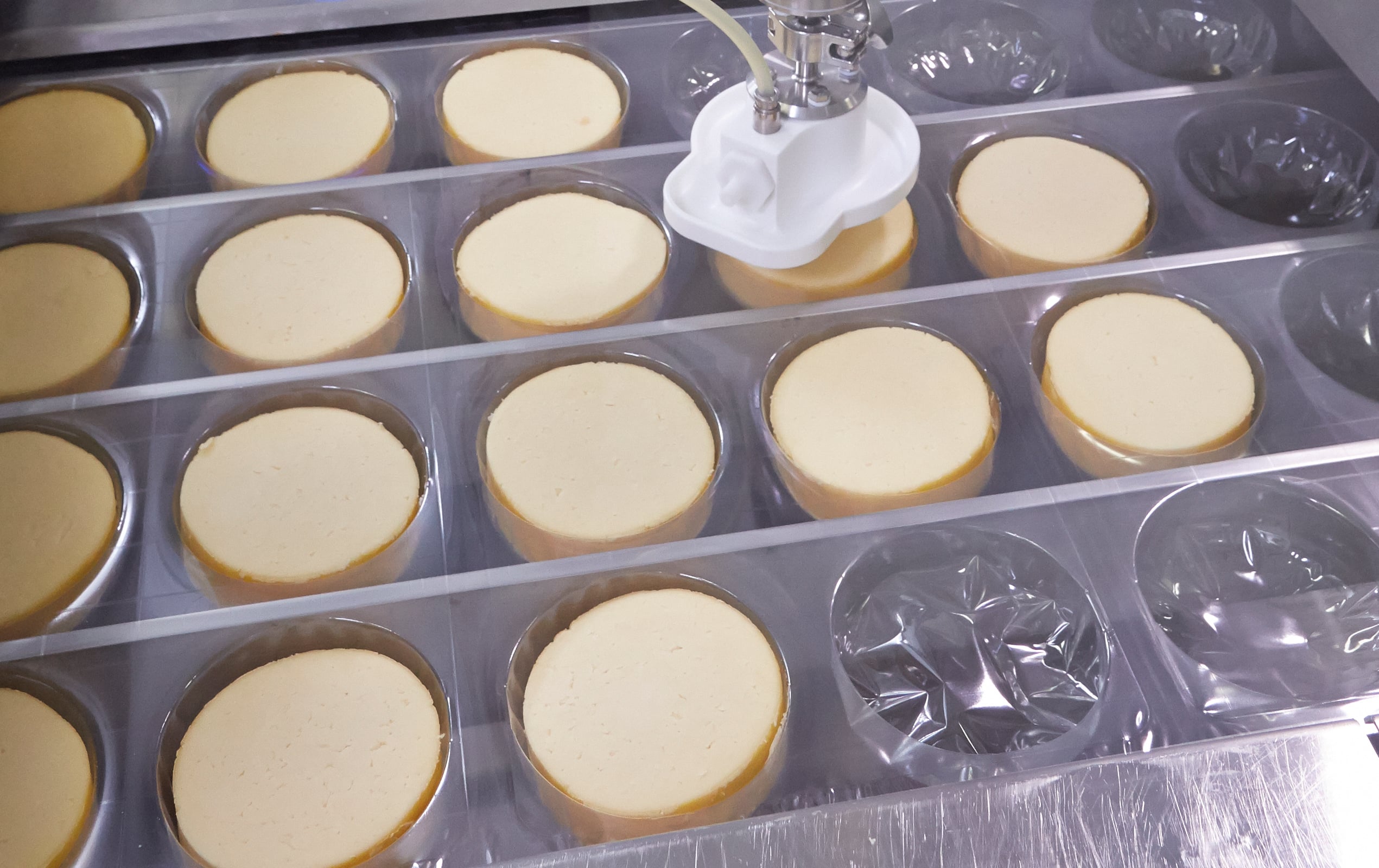
Sticks, logs, slices & thermoformed cheese.
Explore cheese & dairy →
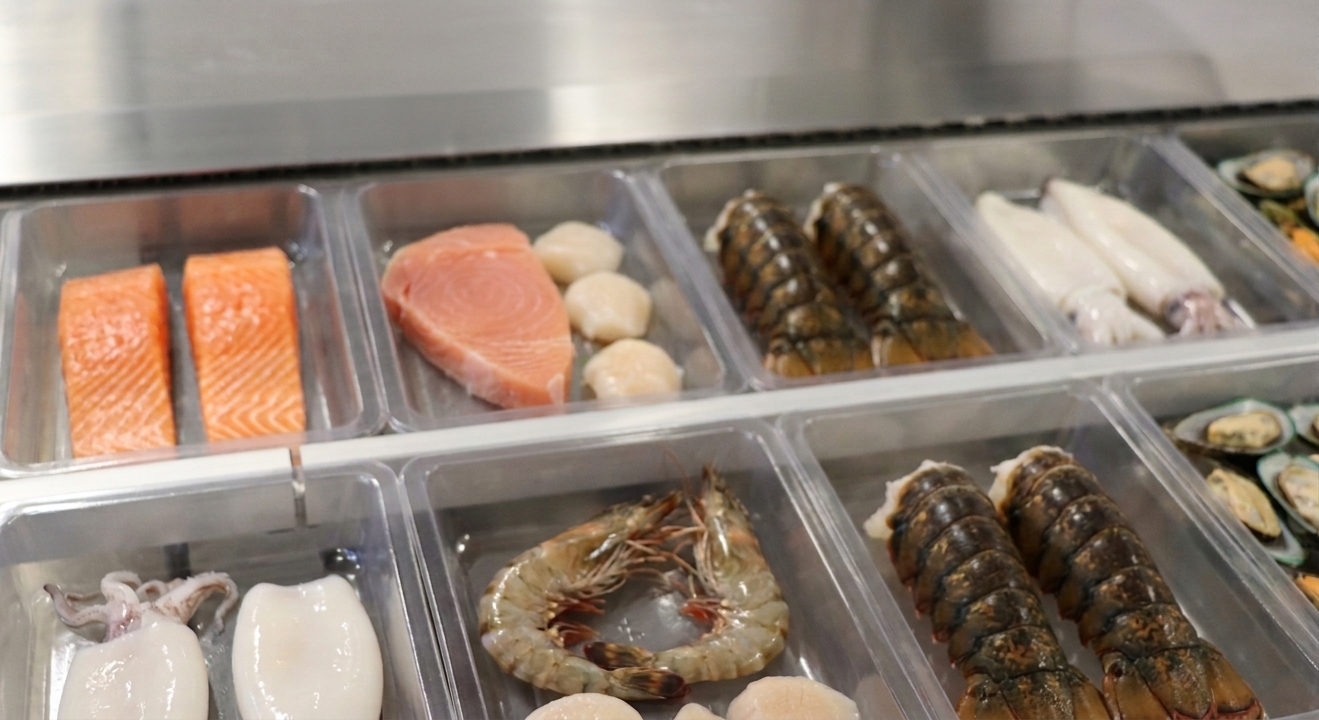
Fillets, shellfish & value-added seafood.
Explore seafood →
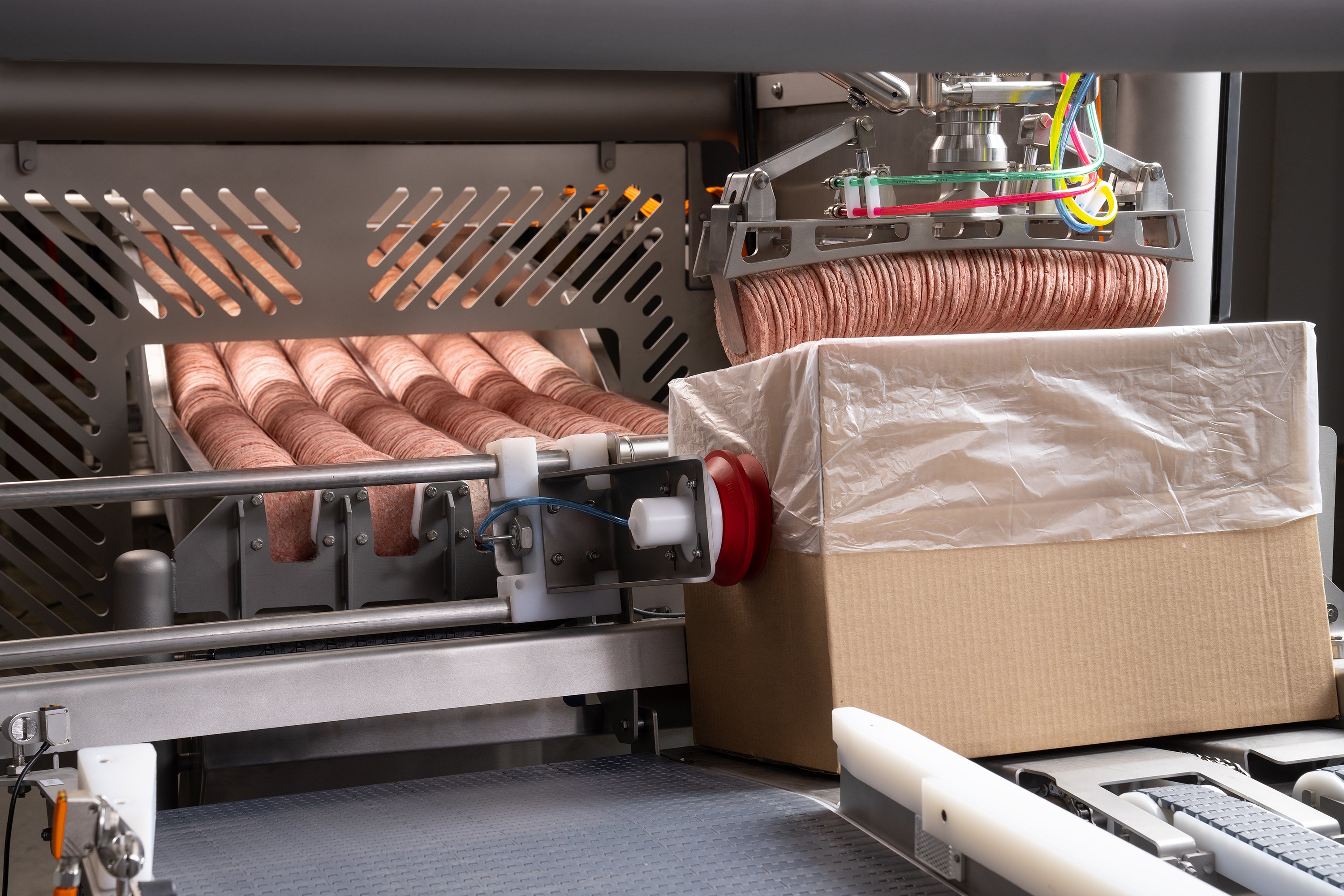
Plant-based patties, grounds & sausages.
Explore alternative proteins →Prepared & packaged foods
IQF, frozen entrées, patties & meals.
Explore frozen foods →
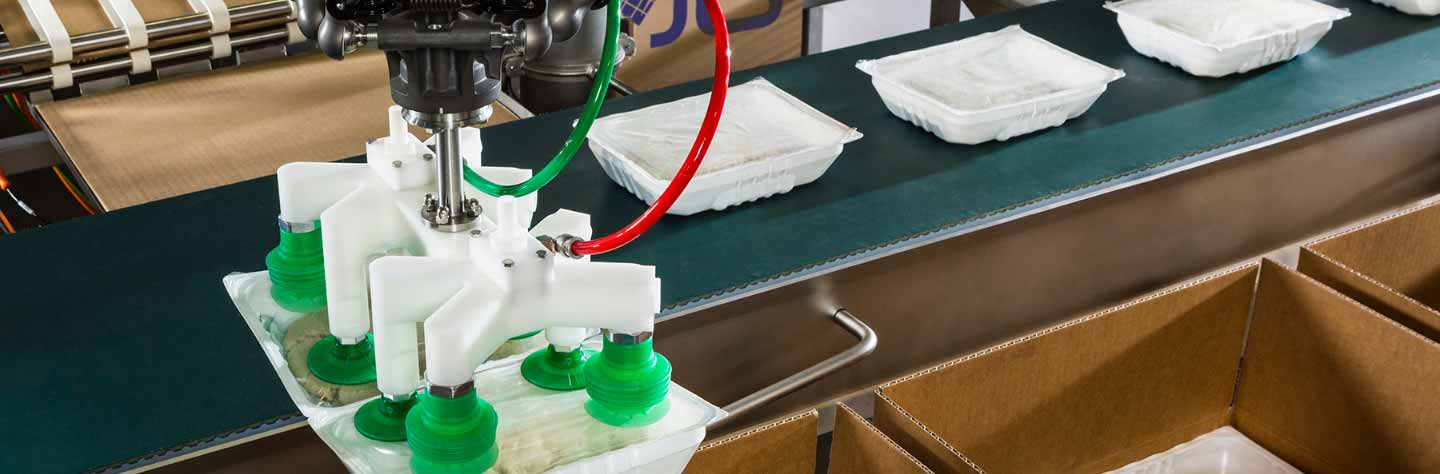
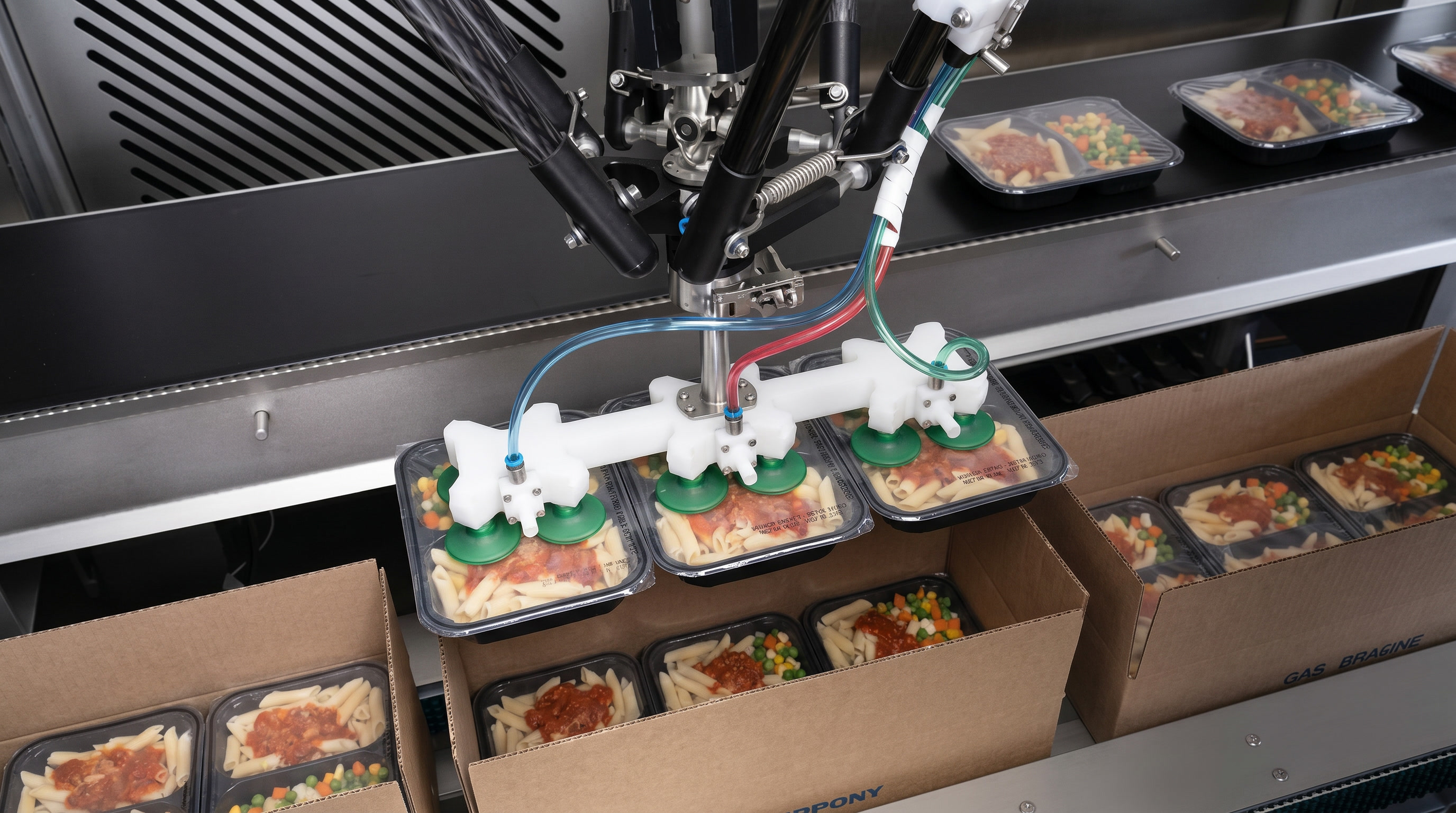
Trays, bowls & multi-component meals.
Explore ready meals & prepared foods →
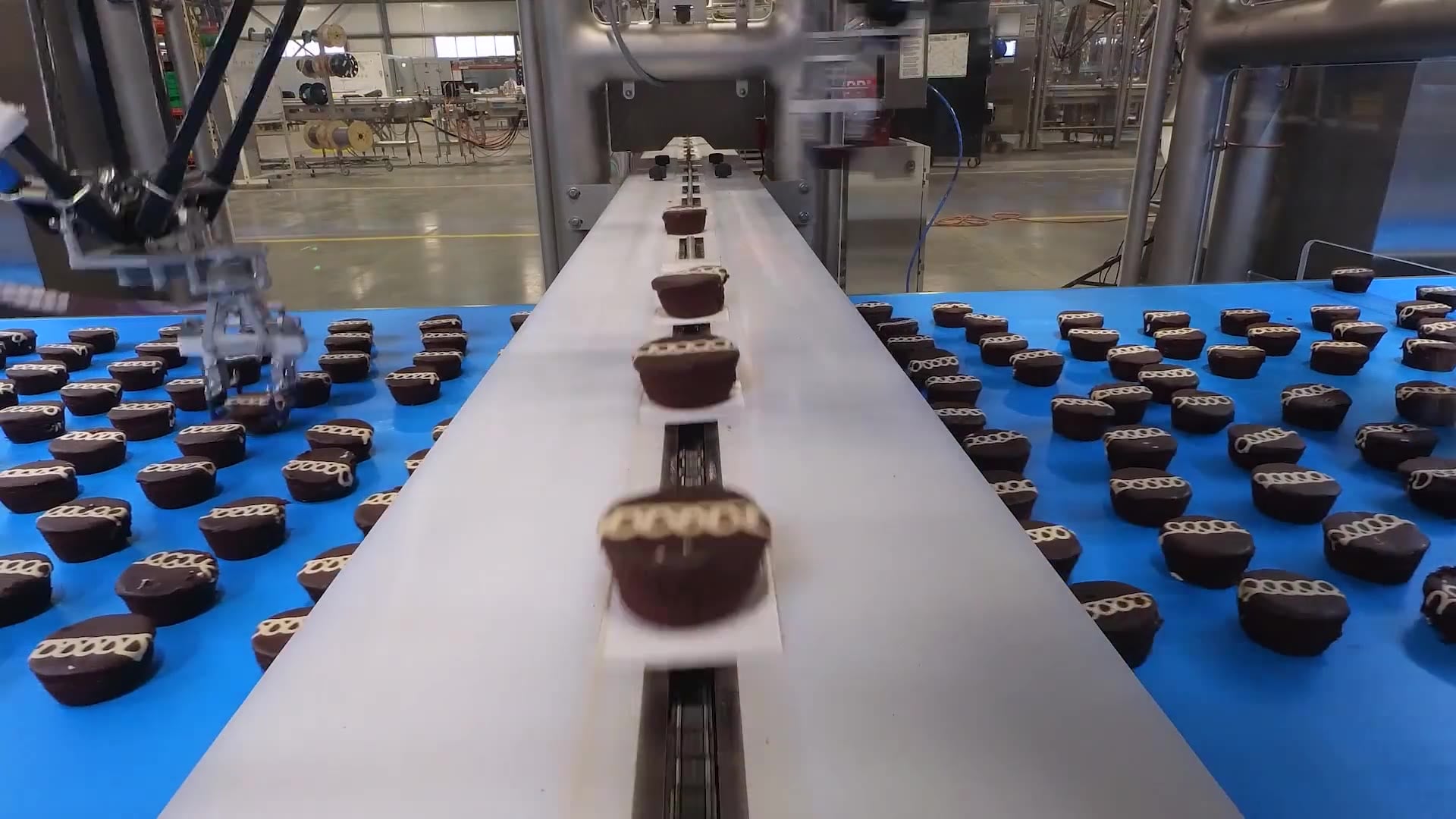
Cookies, muffins, bars & baked snacks.
Explore bakery, bars & baked goods →
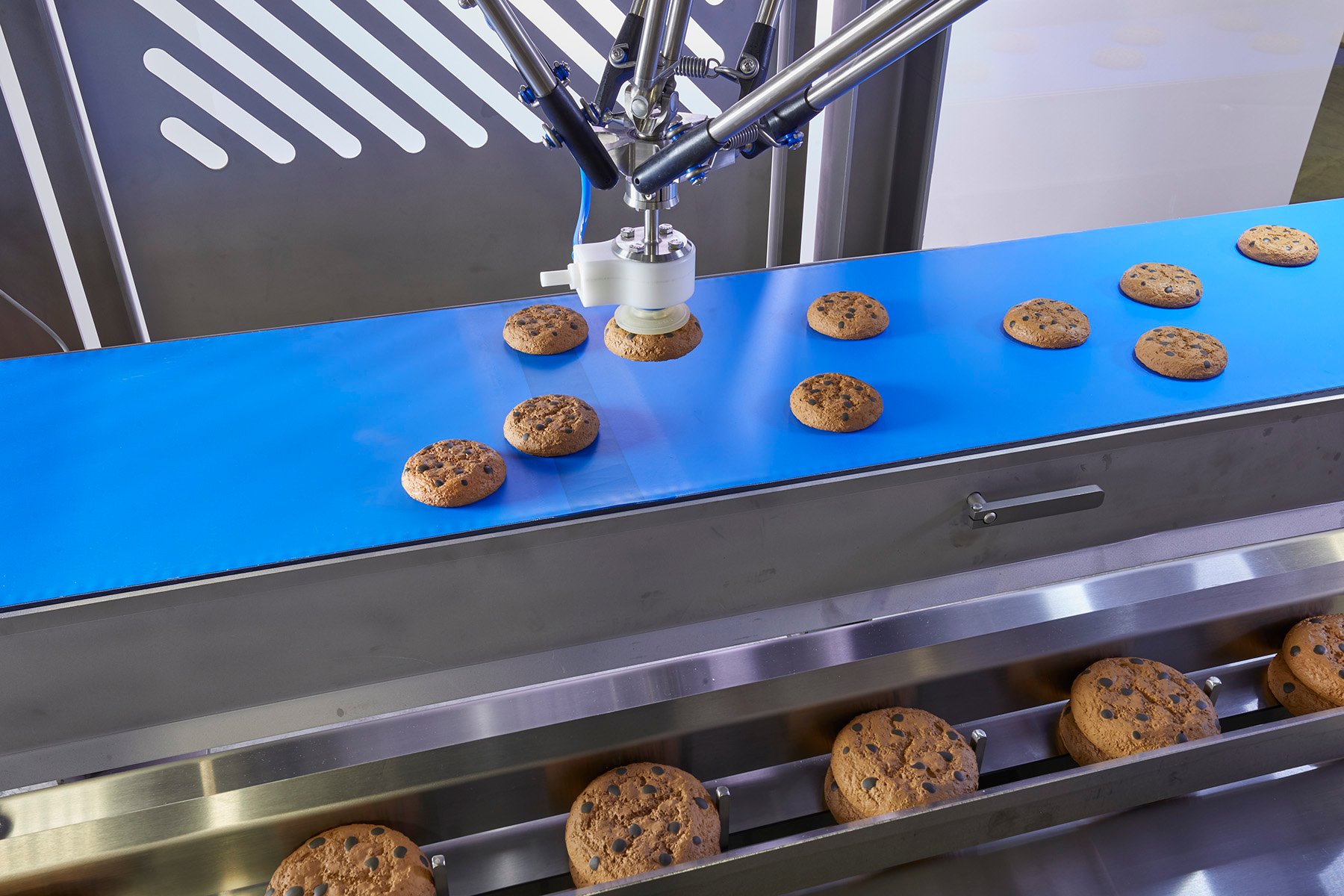
Bagged, boxed & tray-packed snacks.
Explore snack foods →
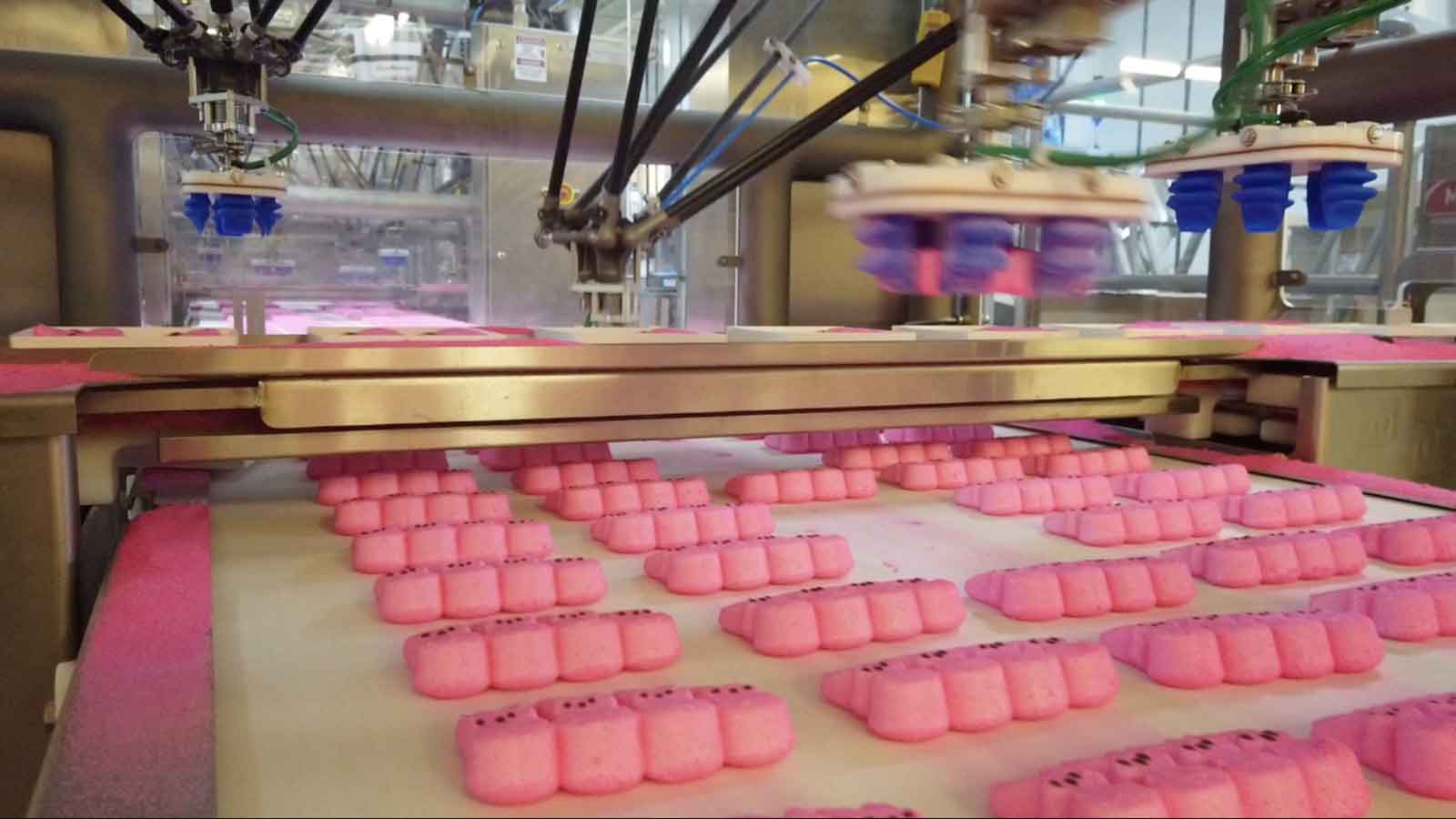
Candy, soft confections & seasonal lines.
Explore confectionery →
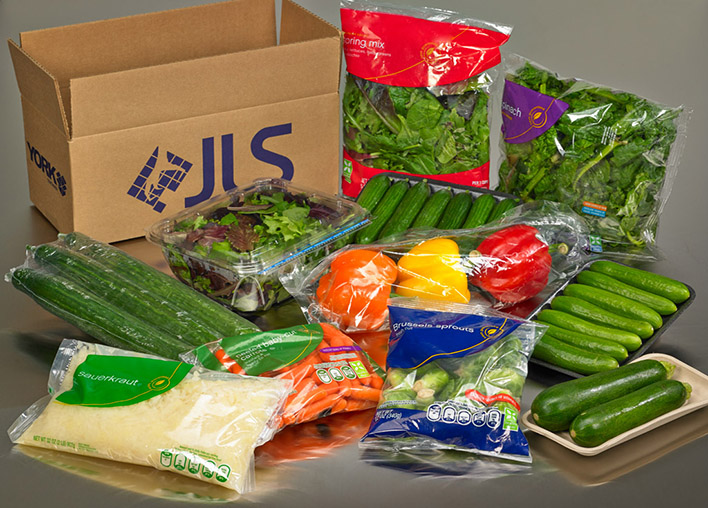
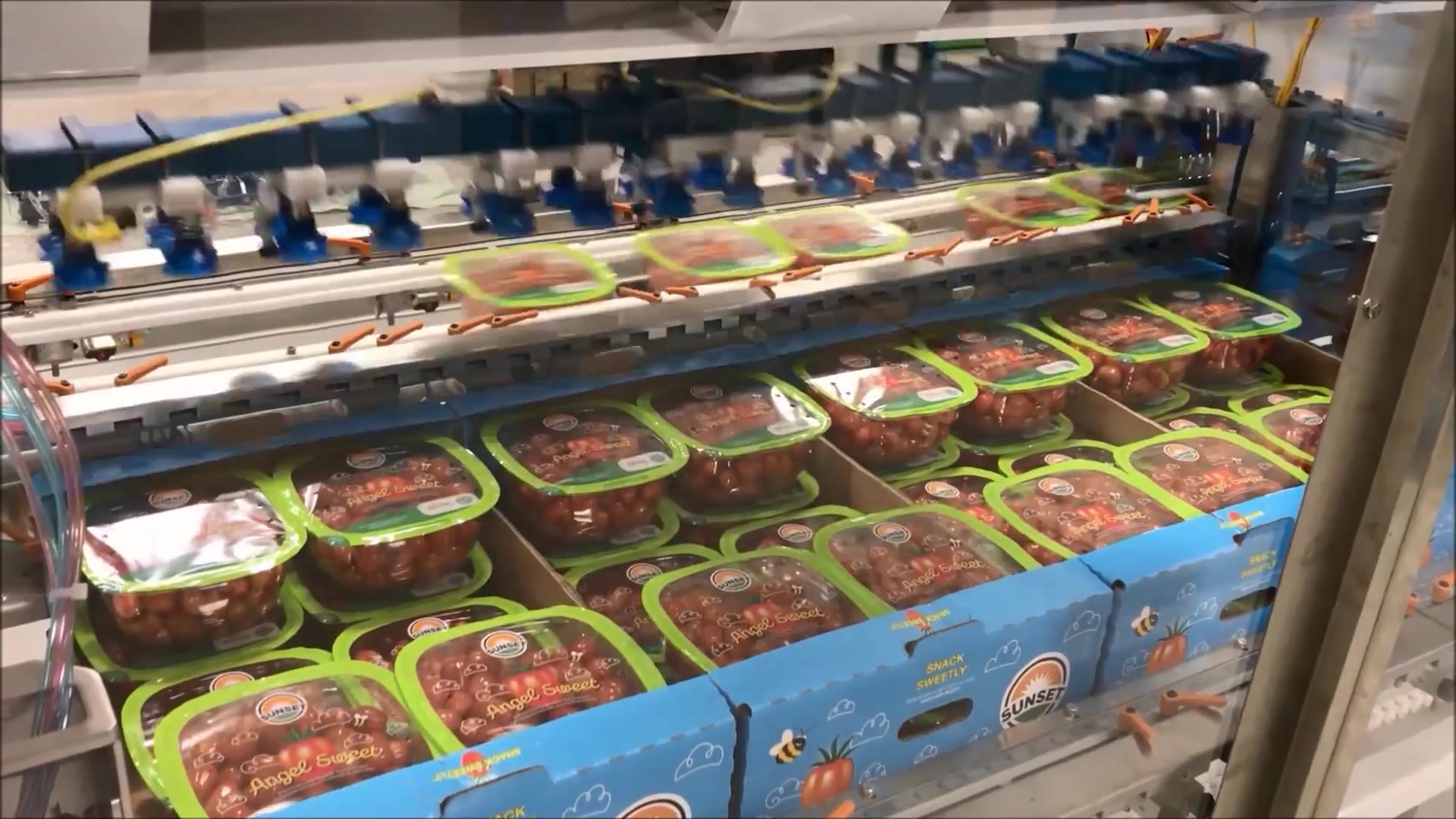
Fruit, vegetables & value-added produce.
Explore fresh produce →Other applications
Don't see your product?
JLS specializes in the food products that are genuinely difficult to automate — wet, sticky, fragile, irregular, and everything in between. If your food product can be picked, placed, or packed, our application engineers want to see it — and we'll prove the application in our Flight Lab — on your product or a close proxy — before you commit.
Talk to a packaging automation expertIn Action
Watch JLS robotics across the food industry.
JLS capabilities
Primary packaging capabilities
How JLS vision-guided robots handle food products from the line into packaging.
Primary packaging capabilities
How JLS vision-guided robots handle food products from the line into packaging.
Automatic chub loading
The Osprey CL loads ground-meat chubs into cases at production speed.
Hygienic tray loading of fresh poultry
Robotic tray loading of fresh chicken in a full-washdown environment.
Cheese thermoformer loading in operation
Robotic loading of cheese into thermoformer pockets at line speed.
Frozen IQF patty case packing
The Patty Hawk case packs frozen IQF hamburger patty stacks, with full-washdown construction and an IP69K-rated delta robot.
Test before you commit
Send us your product.
We'll put it to the test.
JLS Flight Lab puts your application on real JLS robotics in York, PA. Send product samples, or a close proxy, subject to project scope and availability, and JLS application engineers test tooling, pick method, and pack pattern — so feasibility is established before the design is finalized. Rate is validated during FAT before shipment, with final commissioning completed at your facility.
More automation insights.
Engineering guides, application deep-dives, and ROI analysis for food manufacturers evaluating food packaging automation.
When Is It Time to Upgrade to Pack-Out Automation?
It is usually time when the pack-out station has become the thing limiting the line — not when the labor cost gets annoying. The c…
How to Evaluate Packaging Automation Vendors on ROI and Uptime
Evaluate vendors on their assumptions, not their numbers. Any supplier can produce a favorable payback figure by choosing a genero…
What Hygiene Design Features Matter for Fresh Meat Packaging Machines?
For fresh meat, the hygiene features that matter most are the ones that decide whether a machine can be cleaned quickly and comple…
Food packaging automation FAQs.
System pricing varies by configuration and application, and is confirmed during the proposal process. Most JLS food packaging automation projects evaluate payback in the 24–36 month range, depending on labor cost, shift schedule, line speed, uptime improvement, and the specific application. Labor savings scale with the platform, line speed, and labor model, with added value from improved throughput, consistent pack presentation, and reduced product handling. JLS reviews your product mix, package format, line speed, staffing model, and sanitation requirements to determine where automation creates the strongest return.
JLS automates end-of-line packaging for food manufacturers across meat, poultry, sausage and chubs, bacon, formed and portion-controlled proteins, cheese and dairy, seafood, alternative proteins, frozen foods, ready meals, bakery and baked goods, snack foods, confectionery, fresh produce, and pet food. If you make a food product that needs to be loaded into trays, thermoformers, cartons, cases, chubs, or pouches, JLS can usually automate it.
JLS robotic systems load thermoformer pockets, foam and MAP trays, vacuum skin packs, cartons, cases, chubs, brick packs, stand-up pouches, flow-wrapped packs, and retail-ready displays. The right format and machine are matched to your product, line speed, and downstream equipment.
Yes. JLS designs systems for food plants operating under applicable USDA/FSIS or FDA requirements, with construction matched to the product-contact area and sanitation environment. Primary product handling (Talon) can be built with hygienic design principles aligned with NSF/ANSI/3-A and EHEDG, IP69K-rated robots and components, and NEMA 4X-rated control enclosures; secondary case packing and cartoning use cleanable or washdown-capable construction matched to the application. The Patty Hawk pairs full-washdown construction with an IP69K-rated delta robot, and the Hawk uses IP65-rated components. IP69K refers to the rating of selected components, not the complete machine.
JLS builds the Talon (primary handling), Osprey TL/CL/BP (tray, chub, and bag and pouch case packing), Hawk (case packing of cartons, trays, clamshells, and other rigid containers), Patty Hawk (frozen patty case packing), Kestrel (collation of cylindrical products), and Peregrine (high-speed vision-guided pick-and-place). JLS matches the machine, tooling, and layout to your product and packaging format.
Throughput depends on the product, package format, line layout, robot configuration, and required placement accuracy. JLS sizes the automation around your actual product, SKU mix, line speed, and packaging equipment so the system is built for your production requirement rather than a generic rate claim.
Yes. JLS integrates with upstream and downstream equipment including grinders, extruders, portioners, thermoformers, tray sealers, cartoners, case packers, checkweighers, metal detectors, and labeling systems. JLS also works closely with Reiser to support coordinated line solutions where processing and robotic packaging need to work together.
Payback is commonly evaluated in the 24–36 month range, driven by labor savings, improved throughput, more consistent loading, reduced rework, and better ergonomics. JLS helps build the business case around your labor model, shift schedule, and production goals.
Yes. Testing real product in the JLS Flight Lab in York, PA can test product samples, or a close proxy, subject to project scope and availability, to establish the right tooling, pick method, and conveyor control before final design — reducing project risk. Rate and performance are validated during FAT before shipment, with final commissioning completed at your facility.
Yes. JLS automation can often be integrated into existing production and packaging lines. The design depends on available floor space, product presentation, line speed, controls, sanitation access, and upstream and downstream equipment, so the system fits the way your plant actually runs.
JLS typically reviews the product type and dimensions, package format, target speeds, photos or videos of the current line, current labor model, sanitation requirements, available floor space, upstream and downstream equipment, SKU mix, and the main production problem to solve. For variable products, testing may be used to validate the handling method.
JLS food packaging automation systems are designed, built, programmed, and tested at JLS Automation in York, Pennsylvania. Support comes from JLS's in-house support team, with direct access to JLS engineering and programming expertise, including remote diagnostics, on-site service, training, parts, and preventive maintenance.
Talk to an automation expert
Don’t see your product? Tell us what you make.
Tell us what you’re packaging and what you’re trying to solve. A few sentences is enough.
Prefer to talk? Call (717) 505-3800.
Ready for the realities of your line?
Bring us your product. We'll test it in our lab, engineer the automation, and prove the application — before we say yes. Projects commonly evaluate payback in the 24–36 month range, depending on the line.
Over 1,000 installations. Predictable, fast performance. Premier, dedicated service.
- Fast response times (remote + on-site)
- Experienced JLS technicians
- Spare parts & lifecycle support
- Training that sticks with your operators
/JLS%C2%AE_MasterLogo_Navy.png)