/JLS%C2%AE_MasterLogo_Navy.png)
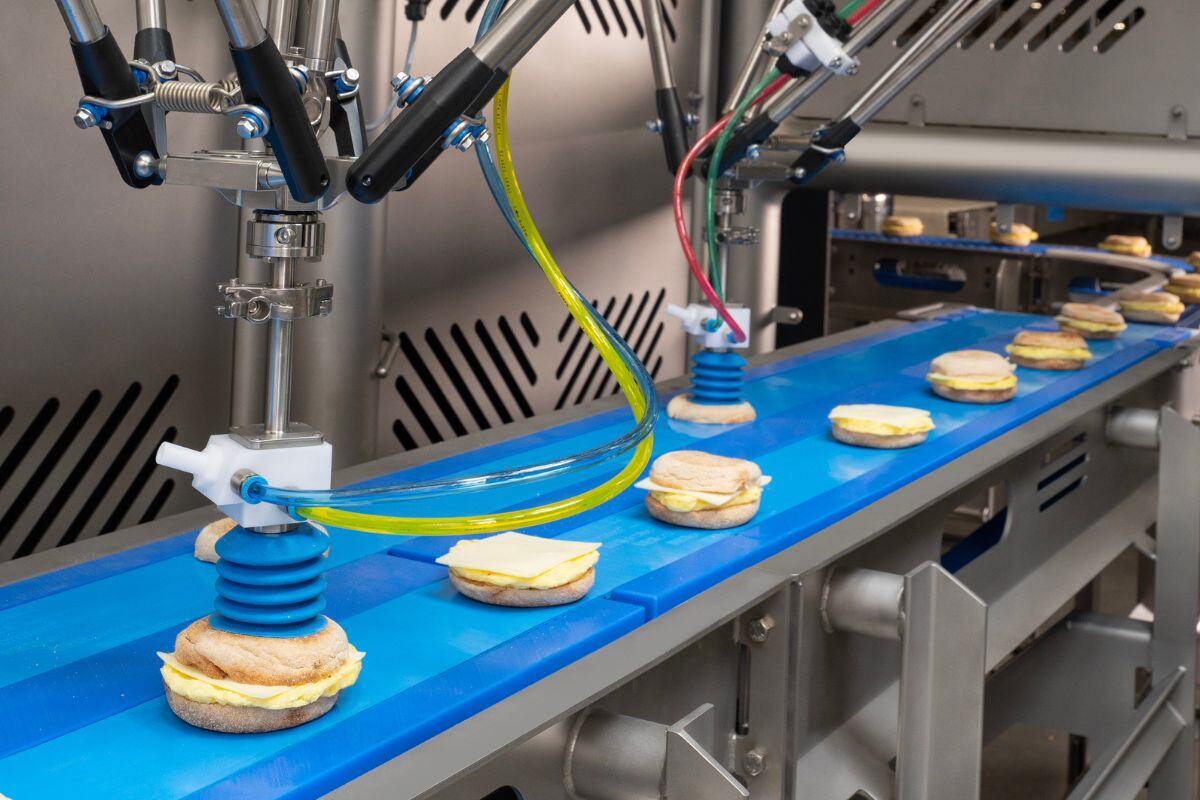
Robotic breakfast sandwich assembly and packing line
Every layer landed.
Every sandwich the same.
In action
Watch JLS vision-guided robots — picking and stacking at production speed.
 Breakfast Sandwich Line
JLS end-to-end automated breakfast sandwich line
See JLS vision-guided delta robots locate, pick, and place food product at full production speed — the robotics behind the breakfast sandwich assembly line.
Why automate breakfast sandwich assembly
Building sandwiches by hand caps both output and consistency.
Manual sandwich building is repetitive, labor-intensive work that is hard to staff and hard to keep consistent at high volume. Every sandwich depends on an operator placing each layer the same way — and at volume, consistency and throughput both suffer while direct hand contact raises food-safety concerns.
Vision in. Consistent sandwich out. JLS engineers the line around your recipe — robotic assembly, tooling, and controls — and coordinates component in-feeds, flow wrapping, inspection, and case packing as agreed interfaces, with rate and performance validated during the project FAT before shipment and final commissioning completed at your facility.
The sandwich line — pick, stack, pack
What the line handles and what's in it.
JLS engineers the breakfast sandwich line around your recipe — from coordinated component in-feeds through vision-guided robotic assembly, flow wrapping, inspection, and case packing — owning its defined automation scope and coordinating the agreed third-party interfaces, with rate and performance validated during the project FAT before shipment and final commissioning completed at your facility.
Products Handled
What's in the line
Integrated Systems
Test before you commit
Run your sandwich recipe in the JLS Flight Lab
before you commit.
JLS Flight Lab puts your components on real JLS robotics in York, PA. Send samples, or a close proxy, subject to project scope and availability, and JLS application engineers test the vision-guided pick and layer-by-layer stack with tooling configured for your products, so feasibility is established before the design is finalized. Rate and performance are validated during FAT on your system, with final confirmation at commissioning.
Core technology
Engineering behind the line.
JLS engineers and programs the application controls and coordinates the interfaces with the selected line equipment — one team from hygienic frame engineering to custom end-of-arm tooling. Backed by multiple patents, these are the technologies that make consistent, high-throughput robotic sandwich assembly possible.

Cleanable to Washdown Construction
Round-tube stainless frame (open-channel available as an option), sloped surfaces, open cable channels, and NEMA 4X-rated control enclosures — offered in cleanable construction for bakery and dry environments, and full sanitary washdown construction for wet protein. Built for the food zone from day one. Not retrofitted.

Vision-guided delta robotics
Vision tracks each component’s position and orientation on the infeed in real time — directing IP69K-rated delta robots to pick base, egg, meat, and cheese in sequence and stack a consistent sandwich every cycle, with no manual alignment.

Tooling configured per component
Each component — base, egg, meat, and cheese — gets end-of-arm tooling configured to its geometry, weight, and surface, so warm, soft, and irregular layers are handled cleanly. Every tool is configured and lab-tested for your exact product.
Fast, recipe-based changeover
Select the new recipe on the HMI, swap the end-of-arm tooling by hand, and run. Every purchased, validated SKU is loaded before the system ships; changeover time depends on the application and which components change.

Assemble, wrap, inspect, case-pack
JLS owns the assembly cells, tooling, and controls and coordinates the agreed interfaces with component in-feeds, flow wrapping, inspection, and case packing, so the line runs as one coordinated system. Rate and performance are validated during the project FAT before shipment, with final commissioning completed at your facility.

Operator HMI & In-House Software
Touchscreen interface designed for plant-floor operators — select a recipe and run — normal production operation doesn’t require an engineer or robot-programming expertise. JLS engineers and programs the application controls in York, PA, on commercially available B&R hardware. After installation, JLS’s in-house support team has direct access to JLS engineering and programming expertise.
Options & Add-Ons
More ways to fit your line.

Stacking, grouping & shingling
Before assembly, coordinated in-feeds deliver each component in the correct sequence and orientation. Vision-guided placement ensures every layer — base, egg, meat, cheese — is positioned the same way every cycle, so every sandwich is built consistently at full production speed.
Patterns are part of the product recipe — switching counts or arrangements happens on the HMI alongside changeover, with tooling changes only where the product calls for them.
presentation
pack patterns
on the HMI

How it works
From components to case —
in one integrated line.
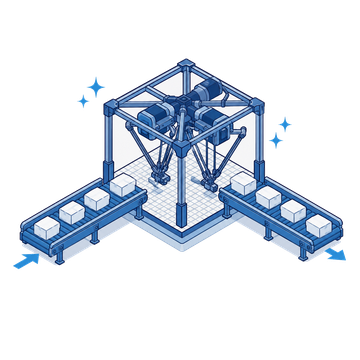
Five coordinated stages. One control platform. Every sandwich built the same way, every cycle.
In-feed
Components arrive on coordinated in-feed conveyors
Base, egg, meat, and cheese each arrive on their own timed conveyor — synchronized to the assembly cell cycle.
Locate
Vision locates each component's position & orientation
Camera-based vision identifies where each piece is and how it's oriented — every pick, every cycle.
Stack · Vision-Guided
Delta robots pick and stack each layer in sequence
Vision-guided delta robots place each component — base first, then egg, meat, cheese — in the correct order and alignment.
Wrap
Finished sandwich is placed and flow-wrapped
The assembled sandwich is transferred to the flow wrapper, which seals each unit consistently at full production speed.
Inspect · Pack
Wrapped sandwich is inspected and case-packed
Inline checkweighing, metal detection, or x-ray screens each unit before robotic case packing closes the line.
Ready to spec your line?
Talk to a JLS Automation Expert.
Tell us your recipe, throughput target, and current process — manual or partially automated. We'll spec a complete line built around your exact product, plant, and sanitation requirements.
Specs & configuration
Breakfast sandwich assembly line —
technical specifications.
Every line is configured to your recipe, throughput, and facility. Specs below represent typical configuration for a full-stack breakfast sandwich line.
| Products Handled | English muffin, biscuit, croissant, bagel breakfast sandwiches; other prepared formats per application |
|---|---|
| End-of-Arm Tooling | Custom per product and layer; mechanical or VOB 2.0 Vacuum on Board tooling configured to geometry, weight, and surface |
| Robot Type | 4-axis delta robots; vision-guided; IP69K-rated |
| Line Components | Component in-feeds, robotic assembly cells, flow wrapper, inline inspection (checkweigh, x-ray, metal detect), robotic case packing |
| Vision System | Camera-based vision for component location and orientation at each assembly station |
| Build Formats | Full stack (base + egg + meat + cheese); partial builds; recipe configured at HMI |
| Inspection | Inline checkweighing, x-ray, and/or metal detection; configured per application |
| Control System | B&R single control platform; in-house JLS programming; HMI with recipe management |
| Changeover | Recipe-driven, application-dependent changeover; tool-free EOAT change where the application allows |
| Sanitation | IP69K-rated delta robots; system sanitation level configured per application |
| Construction | Sanitary stainless food-zone frame (open-channel available); configured to cleanable or full sanitary washdown construction per application |
| Scalability | Robot count and line components selected during system design around your target rate |
| Electrical Supply | 480VAC 3-phase 60Hz |
| Air Supply | 80+ PSI clean, dry, oil-free compressed air |
| Built | JLS robotics designed and built in York, PA; rate and performance validated during the project FAT, with final commissioning on site |
Where should we send it?
By submitting, you agree that JLS Automation and Robert Reiser & Co. may contact you about your inquiry.
More automation insights.
Engineering guides, application deep-dives, and ROI analysis for food manufacturers evaluating food packaging automation.
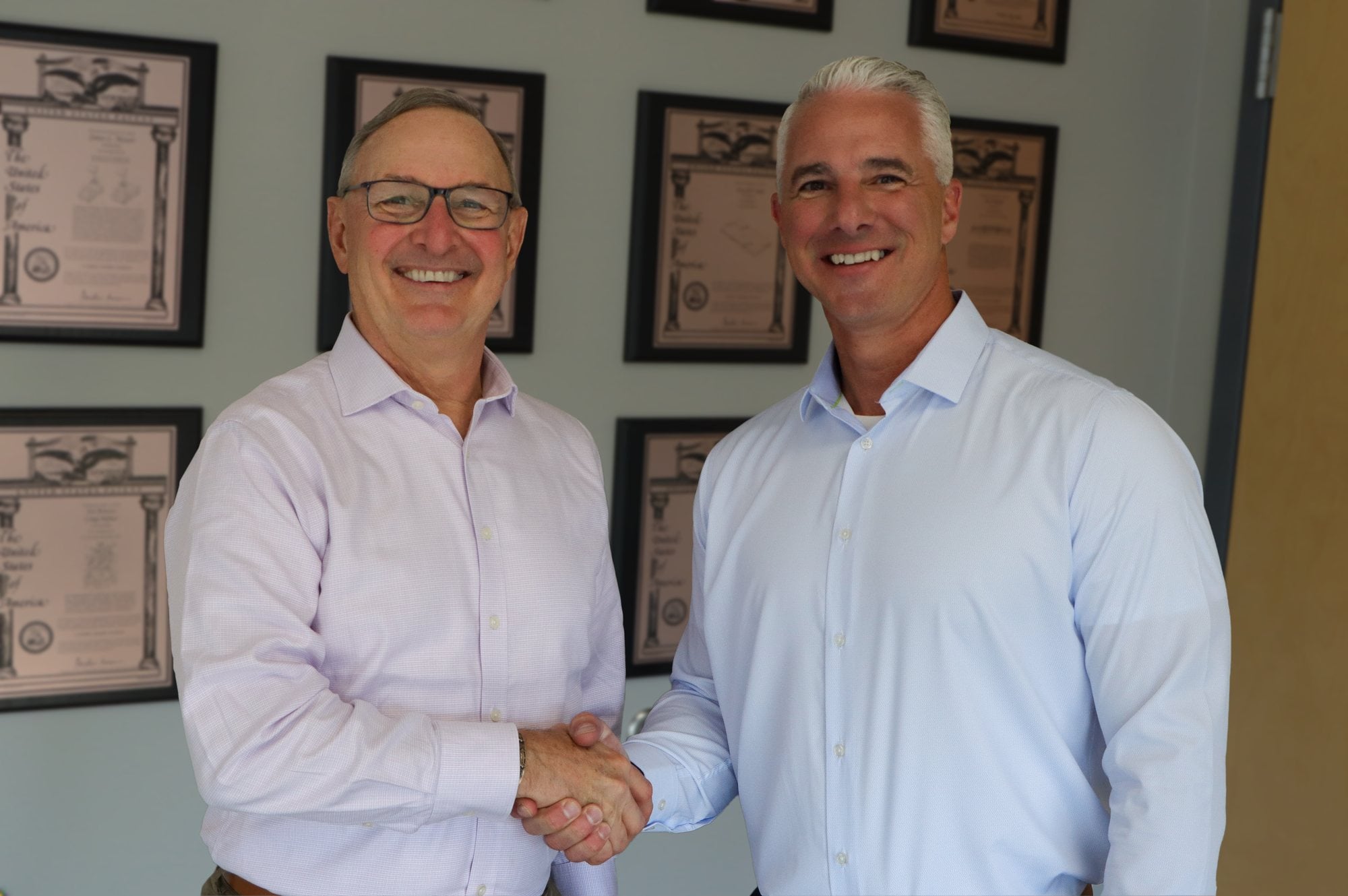
JLS Automation Names Russ Stroner President and CEO as Craig Souser Retires
Craig Souser (left), who retired as President and CEO of JLS Automation and becomes Chairman Emeritus, with Russ Stroner, the comp…
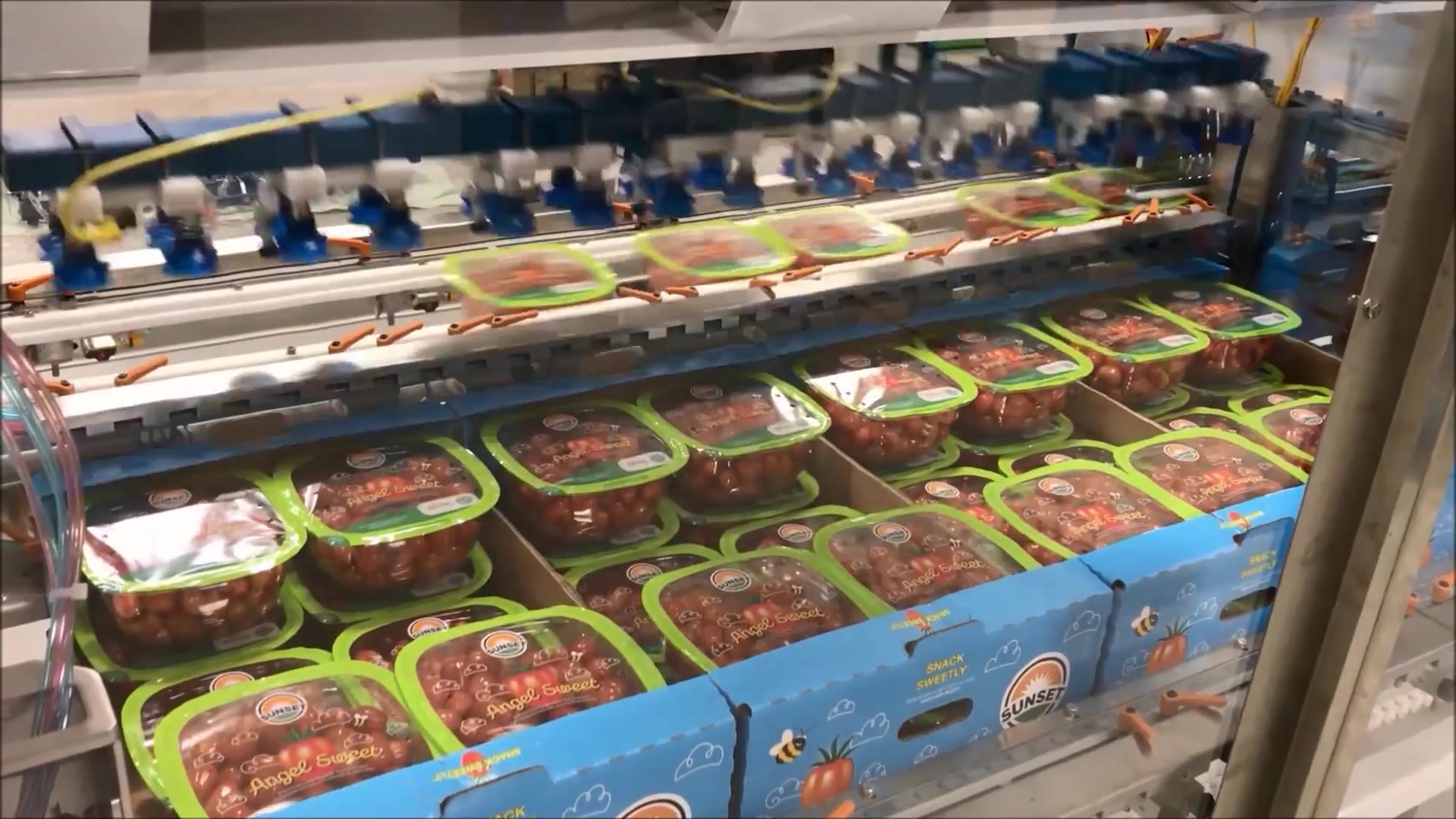
When Is It Time to Upgrade to Pack-Out Automation?
It is usually time when the pack-out station has become the thing limiting the line — not when the labor cost gets annoying. The c…
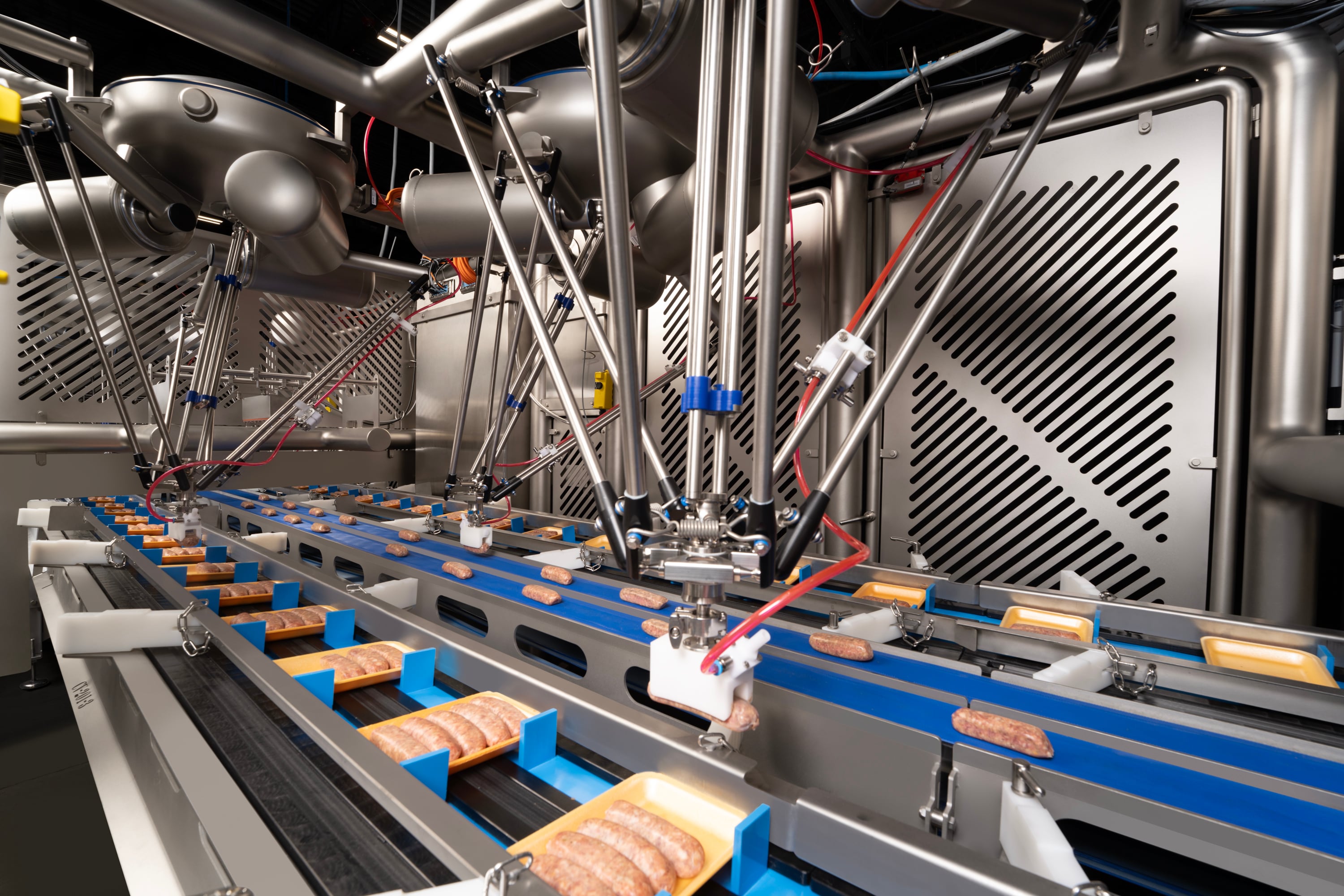
How to Evaluate Packaging Automation Vendors on ROI and Uptime
Evaluate vendors on their assumptions, not their numbers. Any supplier can produce a favorable payback figure by choosing a genero…
* IP69K refers to the ingress-protection rating of selected components (robots, motors, enclosures) specified for an application — not a rating of the complete machine. Sanitation levels are configured per application. Contact your JLS representative for full details.