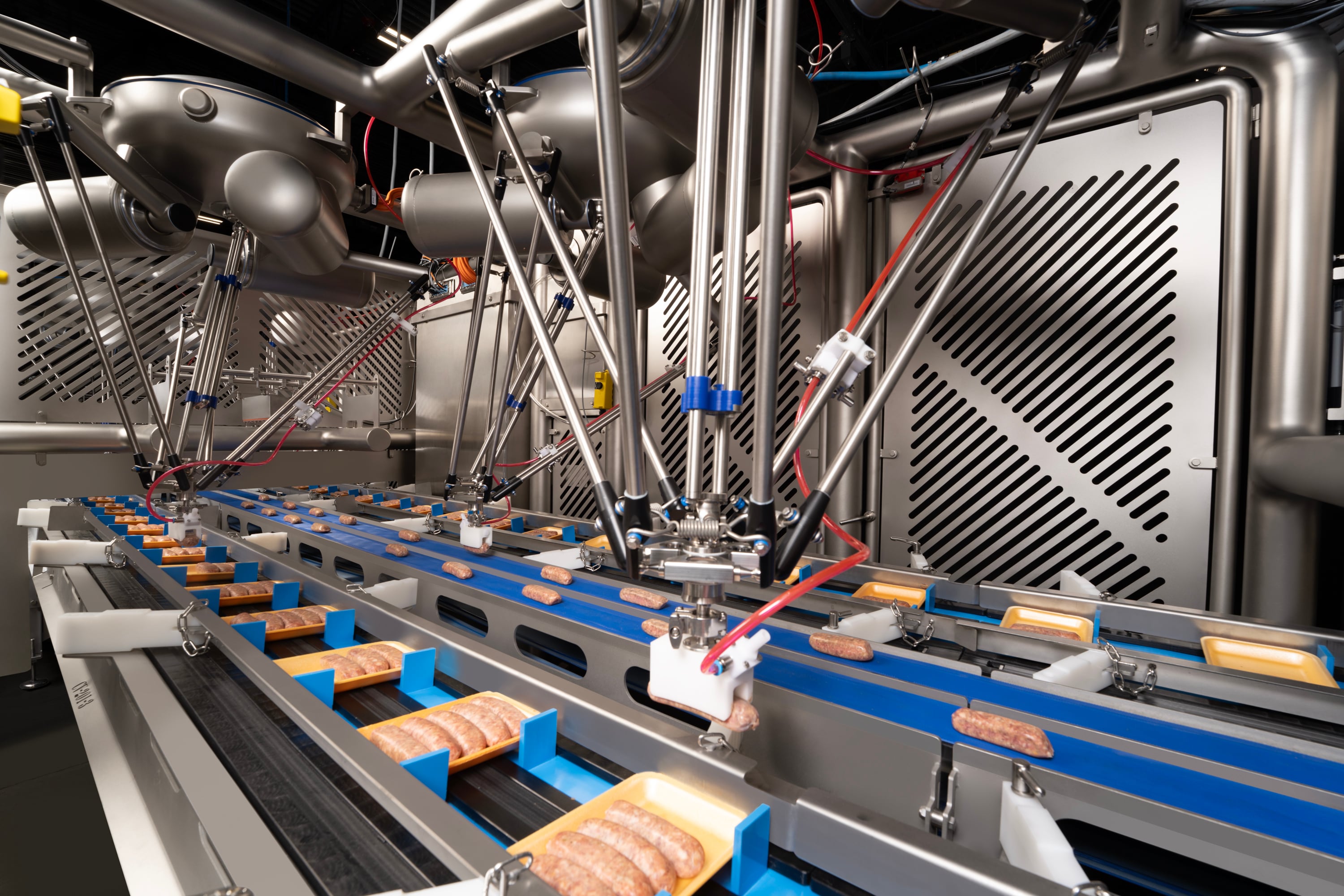
Robotic deli sandwich assembly and packing line

Deli-counter quality,
at production-line pace.

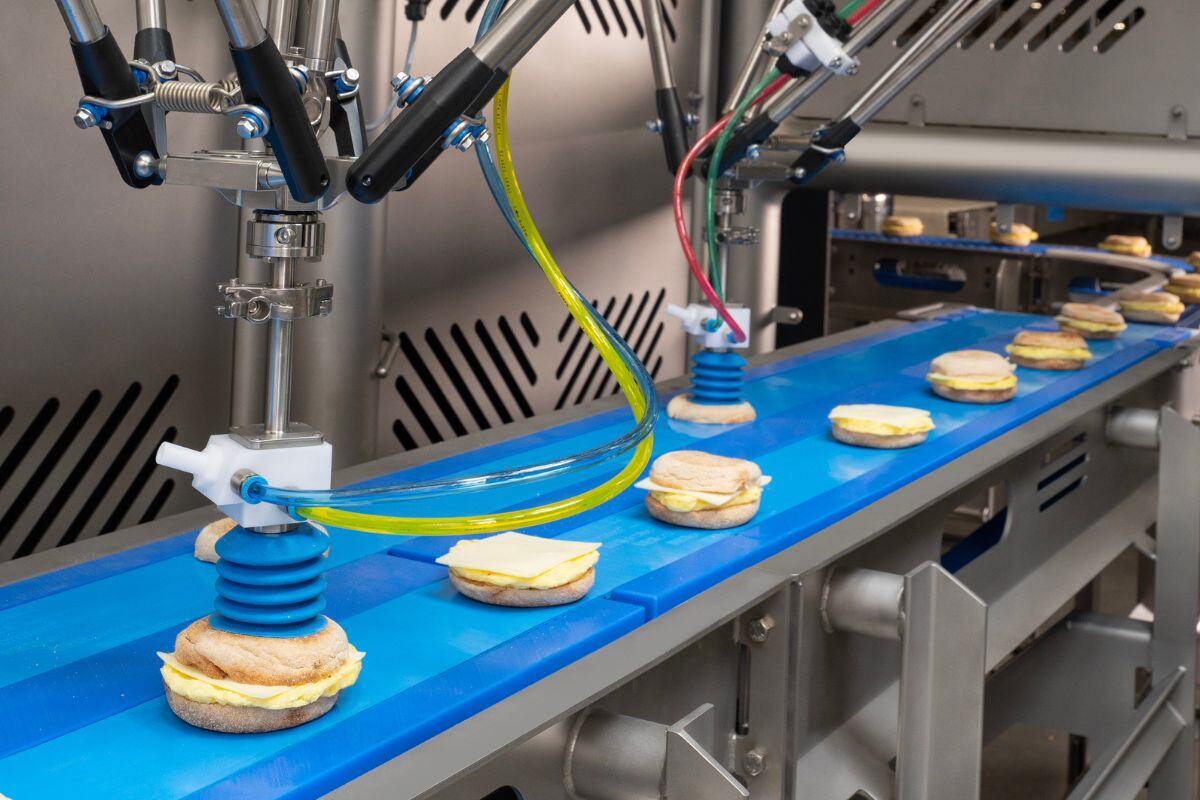
A complete, JLS-integrated deli sandwich assembly line. Automatic slicing and vision-guided IP69K-rated delta robots place sliced deli meats, cheese, and toppings onto bread, rolls, or wraps — building a consistent sandwich every cycle. JLS integrates slicing, component in-feeds, robotic assembly, packaging, inline inspection, and case packing into one line.
Layer by Layer
Vision-guided stacking
Hot & Fresh
Consistent builds every cycle
Washdown-rated
IP69K-rated delta robots
8 Robots
On one proven line
Multiple PatentsAll in Food Packaging Automation
In-House ProgrammingControls, Vision & Robotics Expertise
Factory-Tested ReliabilityBacked by JLS Service & Support
Installation & SupportDedicated Installation, Startup & Support Team
Delivery Timeline at ProposalTarget delivery scoped to your project

The JLS Deli Sandwich Assembly Line is an integrated robotic line that assembles, wraps, and case-packs deli sandwiches. Automatic slicing and vision-guided IP69K-rated delta robots place sliced meats, cheese, and toppings onto bread, rolls, or wraps in sequence — building a consistent sandwich every cycle. JLS engineers and programs the robotic assembly and controls in-house and coordinates the agreed interfaces with component in-feeds, packaging, inline inspection, and case packing; rate and performance are validated during the project FAT, with final confirmation at commissioning.

In action

See a JLS sandwich assembly line run.

JLS end-to-end sandwich assembly line (breakfast format shown) Sandwich assembly

JLS end-to-end sandwich assembly line (breakfast format shown)

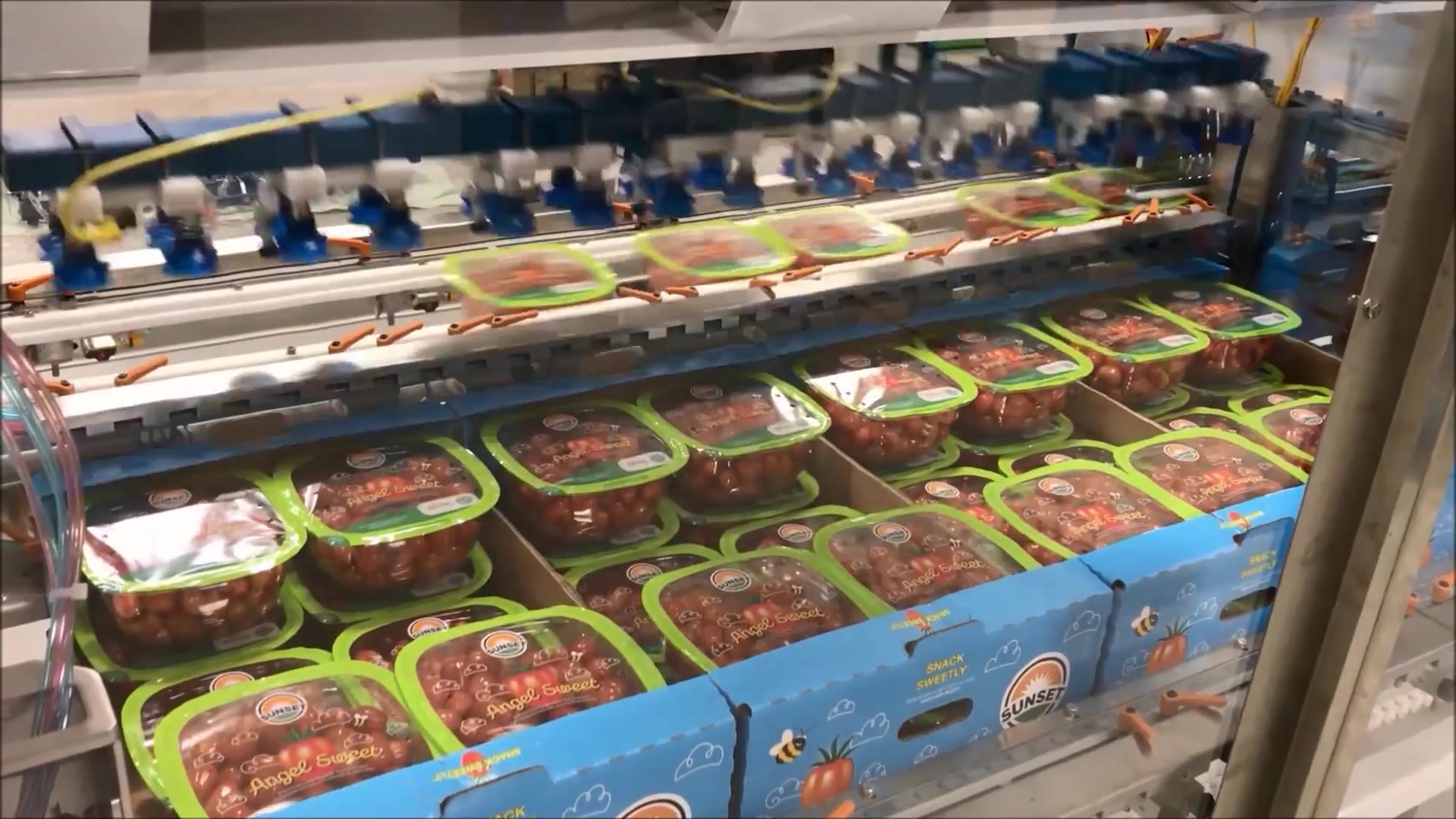
Shown: a JLS breakfast-sandwich line — vision inspection, vision-guided delta robots stacking protein and cheese, flow wrapping, cartoning, and case packing. Deli builds apply the same robotic stacking approach to sliced meats, cheese, and bread or rolls; deli-specific footage is coming soon.

Why the JLS deli sandwich line

Building deli sandwiches by hand is a labor problem waiting to scale you out.

Manual sandwich assembly is repetitive, labor-intensive work that is hard to staff and hard to keep consistent at volume — and direct hand contact with sliced meats and cheese raises food-safety concerns. At higher output, every layer depends on an operator, and the consistency and throughput both suffer.

Components in. Consistent sandwich out. The JLS integrated line is configured around your recipe, components, and facility — so one of the most repetitive jobs in prepared foods becomes one of the most predictable.

Applications & package types

The sandwich line — pick, stack, pack.

JLS engineers the deli sandwich assembly line around your recipe, owning its defined automation scope and coordinating the agreed interfaces with the other equipment on the line. Automatic slicing and vision-guided IP69K-rated delta robots place sliced deli meats, cheese, and toppings in sequence, building a consistent sandwich every cycle. JLS integrates the full line: automatic slicing, coordinated component in-feeds, vision-guided robotic assembly, thermoform or flow-wrap packaging, inline inspection, and robotic case packing, with rate and performance validated during the project FAT before shipment and final commissioning completed at your facility.

Products handled

Sub & Hoagie RollsDeli classic
Sliced BreadStacked sandwiches
Ciabatta & ArtisanPremium
Wraps & FlatbreadsRolled formats
Other PreparedTalk to our engineers

What's in the line

Automatic SlicingMeats & cheese, portioned
Component In-FeedsBread, meats, cheese, toppings
Custom End-of-Arm ToolingConfigured per component
IP69K-rated delta robots + visionSanitary, washdown-rated
Thermoform / Flow WrapSealed for shelf life
Inspection + Case PackingCheckweigh, x-ray, case pack

The Challenge

A gap many food lines share —
and the system built to close it.

✕The Problem

Manual handling at this station is hard to staff — and harder to keep consistent

The same repetitive work, every shift — capping throughput and adding food-safety risk.

The repetitive manual work at this step is increasingly difficult to staff, and consistency slips across shifts. When people fall behind, the line slows, rework climbs, and hand contact adds a food-safety exposure. Add high annual turnover, rising ergonomic claims, and a shrinking labor pool, and the cost of doing it by hand keeps climbing.

Chronic
Turnover in manual packing roles
Every shift
Repetitive work that's hard to staff
Line rate
Throughput manual handling can't sustain
✓The Solution

Engineered robotic automation configured to your exact product

JLS engineers, tests, and installs the system — proven before it ships.

JLS designs the system around your product, package, and line — tooling, vision, and controls engineered and programmed in-house around commercially available robots. JLS Flight Lab tests your product, or a close proxy, subject to scope and availability, so feasibility is established before final design; rate and performance are validated during FAT, with construction matched to your sanitation program.

FAT
Validated in factory testing before shipment
Recipe-driven
Changeover, application-dependent
In-house
Controls programming by JLS

Test before you commit

See your product run on a JLS line
before you commit.

JLS Flight Lab puts your components on real JLS robotics in York, PA. Send product samples, or a close proxy, subject to project scope and availability, and JLS application engineers test tooling, pick method, and stacking for each component so feasibility is established before the design is finalized. Rate is validated during FAT before shipment, with final commissioning completed at your facility.

Feasibility
Tooling & pick method tested
U.S. Built
U.S. built automation
Pre-sale
Application testing, subject to availability
Test your product in the Flight Lab

Core technology

The engineering behind the line.

JLS engineers and programs the application controls and coordinates the interfaces with the selected line equipment — one team, one integration lead — from custom end-of-arm tooling to IP69K-rated vision-guided delta robots to component in-feeds, flow wrapping, inspection, case packing, and a single control platform. Backed by multiple patents and a proven track record assembling food products at production speed.

IP69K-rated robots · Hygienic design

Designed to get wet where product is exposed — IP69K-rated robots

Open-frame design, sloped surfaces, and NEMA 4X-rated control enclosures, and IP69K-rated delta robots for the high-pressure, high-temperature washdown of a hot prepared-foods environment. The delta robots and tooling are built for the food zone from day one.1

IP69K-rated components Minimal harborage NEMA 4X enclosures
Locate · Pick · Load

Vision-guided delta robotics

Vision identifies the exact position and orientation of each component as it arrives, so IP69K-rated delta robots pick and stack it precisely — bread, sliced meats, cheese, then toppings — with no fixed guides. Repeatable, vision-controlled placement builds a consistent sandwich every cycle.

Vision-guided Gentle handling High-payload delta
Per-component · Food-safe

Custom end-of-arm tooling

Each component — bread or rolls, floppy sliced meats, cheese, toppings — needs a different touch. JLS designs and lab-tests custom end-of-arm tooling for every component so robots handle even tacky, draping slices gently and reliably at speed. Tooling is food-safe and built for washdown, configured to your exact recipe.

Per-component Lab-tested Food-safe
On-the-fly · HMI-driven

On-the-fly changeover

Switch sandwich recipes and formats from the HMI. Recipes drive the robots, component in-feeds, and packaging so different SKUs run with minimal mechanical adjustment — keeping a fast-moving prepared-foods line productive across its product mix.

Recipe-driven Back-to-back SKUs
One integrated line

Full-system integration

JLS owns its defined automation scope — vision-guided robotic assembly, tooling, controls, and robotic case packing — and coordinates the agreed interfaces with component in-feeds, flow wrapping, inline checkweighing, x-ray, and metal detection so the line runs as one coordinated system. Rate and performance are validated during the project FAT before shipment, with final commissioning completed at your facility.

In-feed → case pack Full-system FAT
Designed & programmed in-house

Single control platform & in-house software

One B&R platform runs the component in-feeds, robots, wrapping, and inspection from one HMI where the project scope allows. JLS engineers and programs the application controls in York, PA, on commercially available B&R hardware. After installation, JLS’s in-house support team has direct access to JLS engineering and programming expertise.

In-house programming ERP/MES ready

Options & add-ons

More ways to fit your line.

Multi-component builds & formats

The robots build the full stack — bread, sliced meats, cheese, and toppings — in the sequence and count your recipe calls for, from a simple two-layer build to a fully loaded sandwich. Vision keeps every layer aligned, sandwich after sandwich.

Components and sequence are part of the recipe — switching is recipe-driven on the HMI, with tooling changes only where a component calls for them.

Full stack
Bread, meats,
cheese & toppings
Any recipe
Sequence &
count to spec
HMI-driven
Recipes change
on the HMI
Coordinated component in-feeds
JLS coordinates separate in-feeds for each component — bread, sliced meats, cheese, toppings — presenting them to the robots in registration so assembly runs as one system.
Integrated sanitary infeed
JLS coordinates sanitary infeed conveyors that present product cleanly and consistently to the robots — the steady, even supply vision-guided picking depends on.
Additional assembly robots
For higher production rates, the line can be specified with additional assembly robots — robot count is selected during system design around your target rate.
Configure your system
Need something specific?
Every JLS sandwich line is configured to your recipe, components, and facility. Talk to a JLS application engineer about your exact requirements.
Talk to an engineer →

Talk to a JLS application specialist

See exactly how an integrated JLS line fits your operation.

Our application specialists know food production — not just robots. Share your product, your line layout, and your throughput targets. JLS takes full system responsibility — concept, design, integration, full-system FAT, install, and training — and our PMP-certified project team runs it start to finish.

Precision in motion

How the JLS sandwich line
assembles, wraps, and packs.

Five integrated steps. Components in, wrapped and inspected sandwich out — built layer by layer.
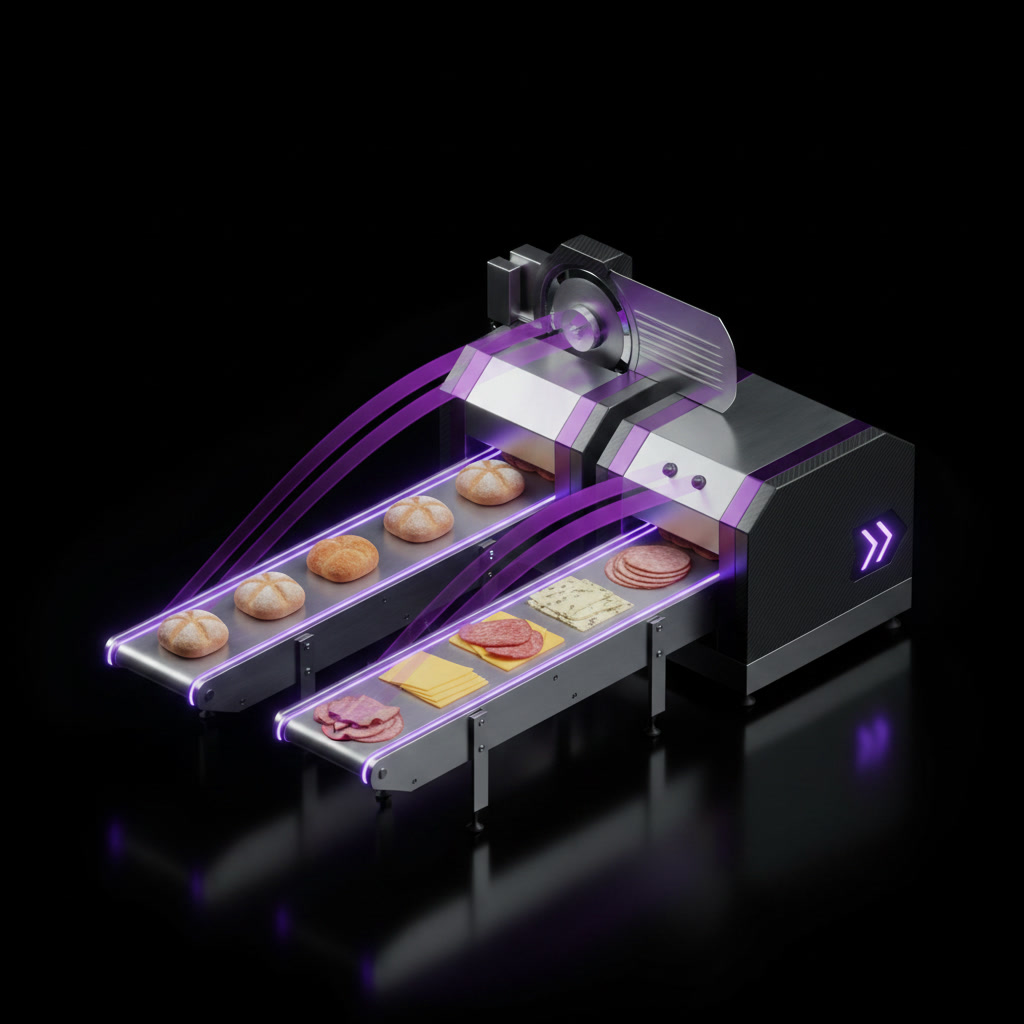
Step 1: sliced components arrive on in-feed conveyors
1

Components arrive on coordinated in-feed conveyors

In-feed
›
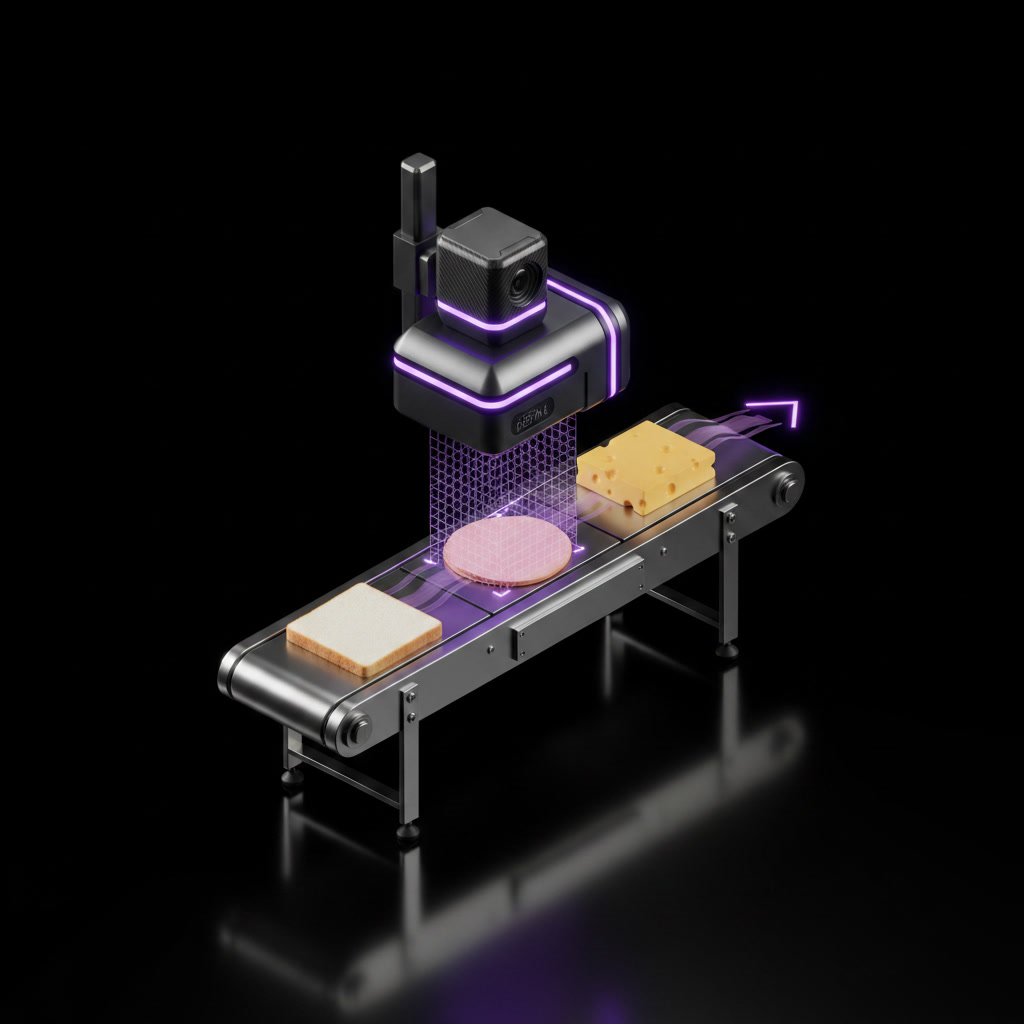
Step 2: vision locates each component
2

Vision locates each component’s position & orientation

Locate
›
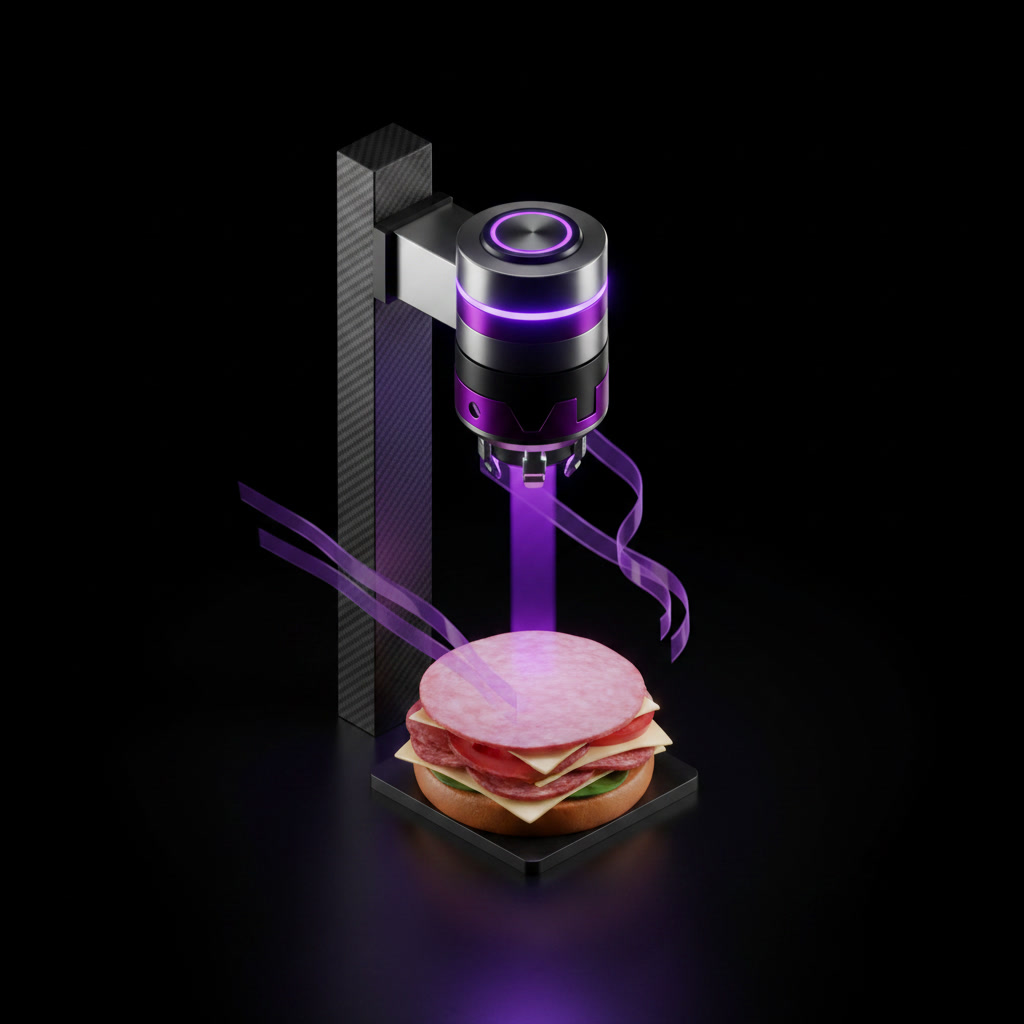
Step 3: tool stacks each layer
3

Delta robots pick and stack each layer in sequence

Stack · Vision-guided
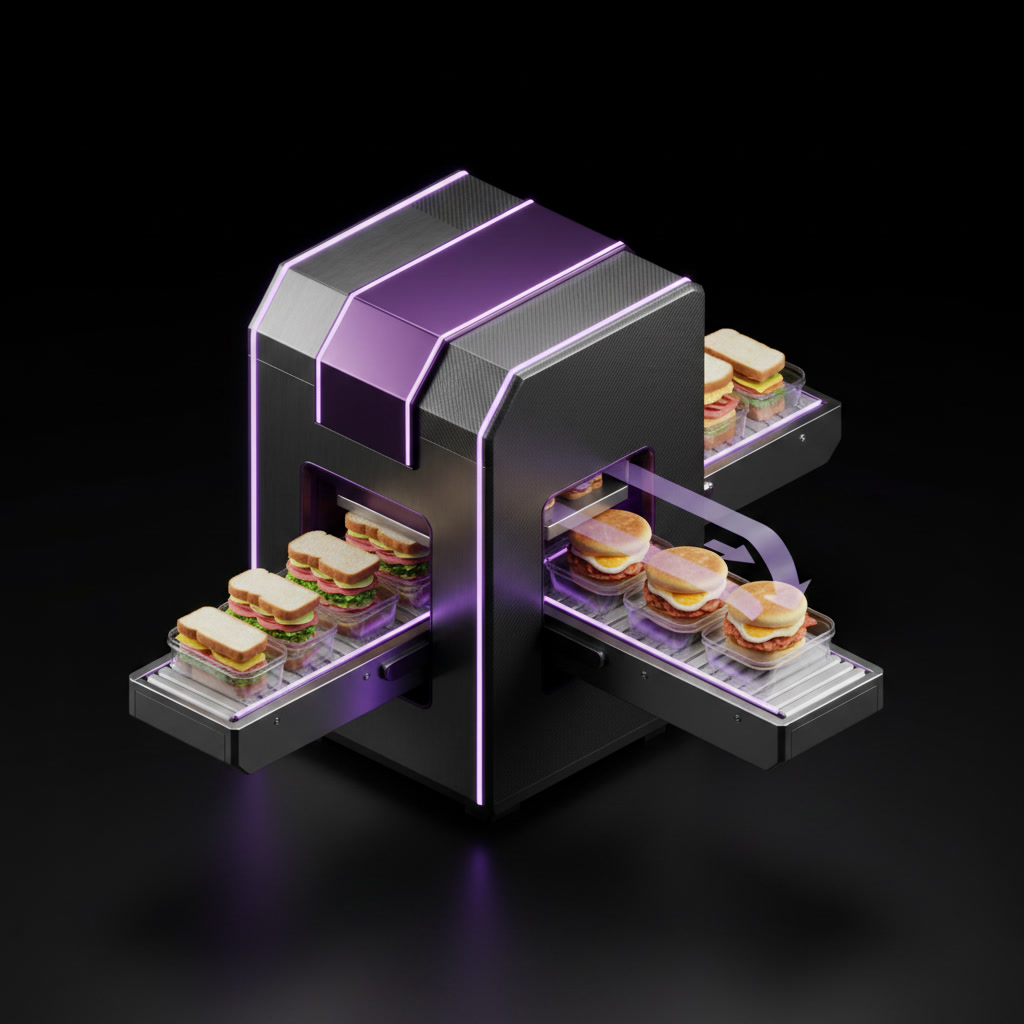
›
Step 4: sandwich packaged and sealed
4

Finished sandwich is placed and flow-wrapped or thermoformed

Wrap
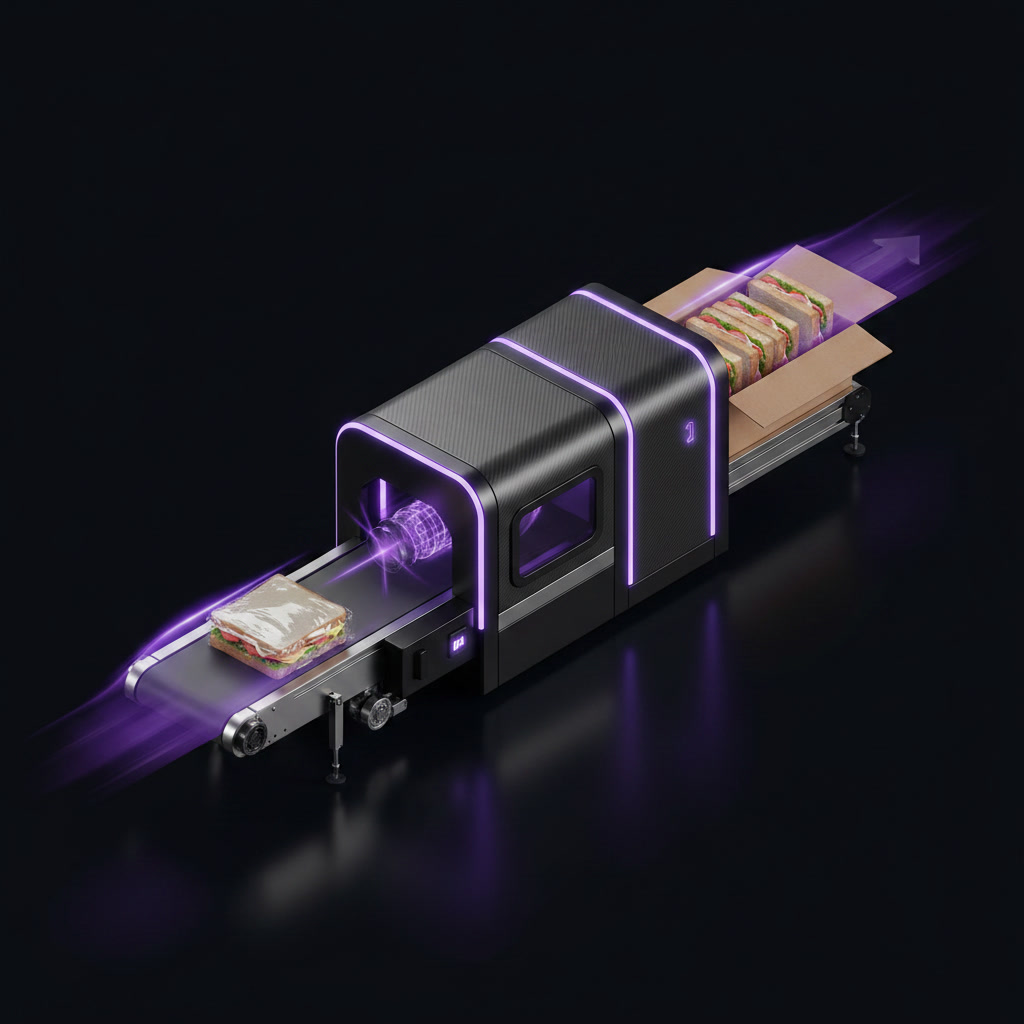
›
Step 5: sandwich inspected and case-packed
5

Wrapped sandwich is inspected and case-packed

Inspect · Pack

Vision-guided delta robots stack each component with custom tooling for a consistent, repeatable build, while JLS-built vision software and a single B&R control platform run the whole integrated line — pick, stack, wrap, inspect, and case-pack — configured to your recipe.

JLS + Reiser: Expertise across the line

Ready to spec your deli sandwich line?

JLS and Reiser help deliver complete integrated lines — from slicing and in-feed through robotic stacking, wrapping, inspection, and case packing — engineered as one coordinated solution, with rate and performance validated during the project FAT before shipment and final commissioning completed at your facility.

Full food production line — JLS + Reiser: expertise across the line Ten production-line stages across four zones. JLS-built robotic automation stages are shown in purple; stages available through Reiser's OEM portfolio in blue; customer-selected or partner equipment in gray. Dashed lines mark coordinated integration points. Prepare. Portion. Form. Load. Seal. Case. Carton. Collate. Stack. Secure. 01Mixing &blendingGrindingEmulsifyingMarinatingTumblingAvailable throughReiser portfolio 02Forming &portioningStuffingExtrudingPatty formingDepositingAvailable throughReiser portfolio 03FurtherprocessingSlicingDicingShreddingTenderizingAvailable throughReiser portfolio 04PrimaryloadingPick & placeVision-guidedLane loadingProduct collationJLS TALONJLS KESTRELJLS Automation 05PrimarypackagingThermoformingTray sealingVacuum / MAPSkin packAvailable throughReiser portfolio 06CasepackingRobotic case loadingRobotic loadingWashdown configurationsWashdown optionsJLS OSPREYHAWK · PATTY HAWKCase erecting & sealing via partner equip.JLS Automation 07CartoningForm, load,close cartonsCompact footprintWashdown-capable designJLS PEREGRINEPEREGRINE ISJLS Automation 08Collation /bundlingCount & stackBundle packMultipackPartner equipmentscope-dependent 09PalletizingLayer buildingRobotic palletizingSlip-sheet placeLayer padPartner equipmentscope-dependent 10LoadsecurementStretch wrapBandingCorner boardTop sheetPartner equipmentscope-dependent Tier 1 Primary Packaging The package that touches the product Tier 2 Secondary Packaging Cases, cartons, and multipacks for retail or distribution Tier 3 Tertiary Packaging Stretch wrap, ship-ready unit

Together, JLS and Reiser help food manufacturers develop coordinated processing and packaging lines—from product preparation and primary package loading and sealing through cartoning and case packing, with third-party collation, palletizing, and load securement coordinated into the plan.

Illustrative line architecture. Stages, equipment suppliers and sequence vary by product and project scope. Not every food line uses every stage, and slicing, cooking, freezing, inspection and other processes may occur in different positions.

Scroll left and right to scan the full line. Open the printable line map →

JLS-built robotic automation Available through Reiser’s OEM portfolio Customer-selected / third-party equipment Coordinated integration point

Reiser role across the line

Food-processing expertise, application development, equipment selection, product testing, and sales & lifecycle support.

JLS role at robotic packaging stages

Robotic engineering, product & package handling, controls interfaces, and integration & FAT when included in project scope.

Let’s talk more about planning your full line.

Tell us who you are and a bit about your line. An automation expert will reach out — and we’ll bring the right people from JLS and Reiser to the conversation.

Your details
Facility location
Your line today
What you're planning
What solution(s) are you interested in?* Select all that apply.
Project timeline

By submitting, you agree that JLS Automation and Robert Reiser & Co. may contact you about your inquiry.

The automation process is smooth, precise, and highly consistent, allowing our packaging lines to maintain production targets with greater reliability and less downtime.
Carlos O'Neill, Plant Manager Family Food Products · JLS Kestrel Collate & Load

Line configuration

Deli sandwich assembly line —
what goes into it.

Every deli sandwich line is configured to the product, the facility, and the target rate. The table below shows the typical components JLS and integration partners (Reiser) bring together. Contact JLS to scope yours.

Line station Typical equipment / capability
Slicing & in-feed Automatic slicing of meat, cheese, and toppings; gravity or conveyor in-feed to assembly zone
Component singulation Centrifugal feeders or indexing belts to present components in orientation for pick
Vision-guided stacking IP69K-rated delta robots with application-matched 2D or 3D vision locate and place each layer — meat, cheese, condiment, topping — onto bread or roll
Robot type 4-axis delta robots, IP69K-rated; typically 6–8 robots per line
End-of-arm tooling Custom EOAT per product; vacuum or mechanical; tool-free swap where the application allows
Primary packaging Flow wrap (horizontal or vertical) or thermoform; integrated inline with robotic assembly
Inspection Checkweigher, metal detection, or vision inspection — inline before case packing
Case packing Robotic case loading — Hawk 2-axis robot arm or delta-based case packer; third-party case erecting and sealing coordinated by JLS as agreed interfaces
Controls B&R Automation; single HMI across all stations; recipe-driven changeover
Sanitation level IP69K-rated delta robots; construction level configured per facility (cleanable or full washdown)
FAT & commissioning Rate and performance validated during the project FAT in York, PA; final commissioning on site
Integration partner JLS Automation + Reiser (primary partner); line-specific scope confirmed at assessment

Application Example · JLS Deli Sandwich Assembly Line

Sliced, stacked, sealed — consistent deli sandwiches at scale.

A US sandwich manufacturer needed to automate multi-component assembly of deli sandwiches. Manual stacking of sliced meats, cheese, and toppings onto rolls was slow, inconsistent, and difficult to staff across multiple shifts. Hand contact at the assembly step raised food safety concerns, and throughput targets were hard to hit reliably.

JLS engineered and integrated a complete assembly line: automatic slicing, component in-feeds, and a team of IP69K-rated vision-guided delta robots that locate, pick, and precisely place each layer — meat, cheese, condiment — onto bread moving along the conveyor. The assembled sandwiches feed directly into flow wrap packaging, inline inspection, and case packing as one coordinated system. The full line was FAT-tested in York, PA on the customer’s actual product before shipment.

We went from four people on that station to one person monitoring three lines. The math is easy.

— Plant Manager, Regional Sausage & Deli Processor · What customers say about JLS (separate installation)

Get the full case study

See the configuration, throughput, and results behind this install.

Tell us more about your challenge

By submitting, you agree that JLS Automation and Robert Reiser & Co. may contact you about your inquiry.

Questions about this application? Talk to an expert →

Deli sandwich line FAQs.

Common questions about robotic assembly, vision systems, IP69K, throughput, integration, and ROI.

Yes. Vision-guided delta robots locate each ingredient — sliced meat, cheese, condiment, topping — on a moving conveyor and place it precisely onto the bread or roll beneath. The system repeats this at full production speed, every cycle, with no variation between sandwiches. JLS Flight Lab can test your components, or a close proxy, subject to project scope and availability, before the design is finalized; rate is validated during FAT before shipment, with final commissioning completed at your facility.

A typical JLS deli sandwich assembly line uses 6 to 8 robots — one or more per ingredient layer depending on the number of components and the target rate. The exact configuration depends on how many ingredients are in the build, how fast they need to be assembled, and the footprint available. JLS scopes the right robot count for your product and line during a line assessment.

The line handles sliced meats (turkey, ham, salami, roast beef), sliced or portioned cheese, lettuce, tomato, condiments, and toppings — applied layer by layer. Custom end-of-arm tooling is engineered to the exact geometry, weight, and surface of each ingredient. Products that are challenging to handle individually (soft, irregular, or fragile) can be tested in JLS Flight Lab, subject to project scope and availability, before tooling is finalized.

The line works with sub and hoagie rolls, sliced sandwich bread, ciabatta and artisan rolls, wraps, and flatbreads. The conveyor and in-feed system is configured to your specific bread format and pitch. Changeover between bread types is recipe-driven from the HMI, with tool-free EOAT change where the application allows.

The delta robots on the line are IP69K*-rated — built to withstand high-pressure, high-temperature cleaning. IP69K refers to the rating of selected components such as the robots — it is not a rating of the complete machine or line. The overall sanitation level of the line is configured per application and facility requirements. Contact JLS for the construction level that matches your washdown protocol.

Operators select the new recipe on the HMI, and end-of-arm tooling is designed for tool-free change where the application allows. Vision parameters update automatically with the recipe. For bread format or ingredient changes, changeover is recipe-driven and application-dependent. JLS designs changeover into the line architecture from the start, not as an afterthought.

JLS owns its defined automation scope — robotic assembly, tooling, controls, and case packing — and coordinates the agreed interfaces with the other equipment suppliers, typically in partnership with Reiser for slicing and preparation equipment. JLS leads controls integration for its scope, the project FAT, and commissioning, and its in-house support team has direct access to JLS engineering and programming expertise.

To scope the line, JLS typically reviews your product type and build (ingredients, bread format), photos or video of the current process, target throughput, SKU count and changeover frequency, facility sanitation requirements, available floor space, and your main production challenge. A brief call or product video gets the conversation started — contact JLS at jlsautomation.com/contact.

Still have a question that isn’t answered here?

What do you want to know?

Ask us anything — an automation expert will follow up.

What can we help with? Optional — select any that apply.

By submitting, you agree that JLS Automation and Robert Reiser & Co. may contact you about your inquiry.

* IP69K refers to the ingress-protection rating of selected components (robots, motors, enclosures) specified for an application — not a rating of the complete machine. Sanitation levels are configured per application. Contact your JLS representative for full details on your line.

Find out what your line is capable of.

We evaluate your line, your product, and your constraints — then show you what will work, what won't, and deliver a detailed ROI projection. No guesswork. No force-fitting.

Over 1,000 installations. Predictable, fast performance. Premier, dedicated service.

  • Fast response times (remote + on-site)
  • Experienced JLS technicians
  • Spare parts & lifecycle support
  • Training that sticks with your operators
Have a product you need loaded, packed or cartoned?
Start with whether it’s a fit — not with a quote.
Tell an application engineer what you’re packaging and what the line looks like today. A few sentences is enough. If the product suits it, JLS can test it in the Flight Lab before any design is finalized.
Already running a JLS line?
Connect with the service experts who keep your automation performing.
Spare parts, preventive maintenance, retooling, training, and on-site support — from JLS's in-house support team, backed by direct access to JLS engineering and controls expertise.